
Side Dishes
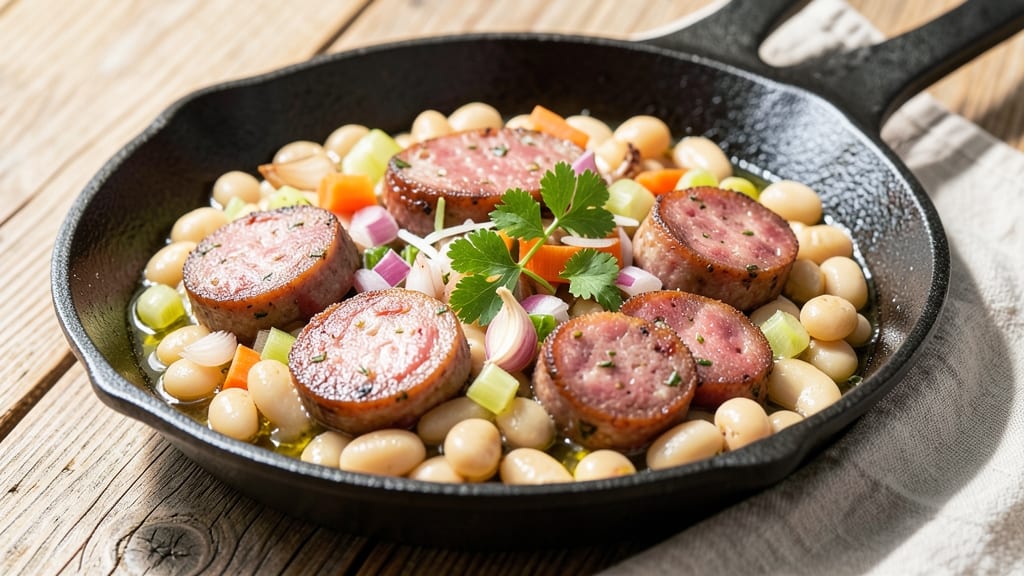
This canned white beans and sausage recipe turns simple pantry staples into a rich, Italian-inspired one-pot dish in under 45 minutes. The secret lies in browning the sausage for deep flavor and letting the beans simmer until tender—no fancy techniques required.
I developed this dish after realizing how often canned beans get overlooked in home cooking, and it’s now a staple in my weekly rotation.
The beauty of this recipe is its simplicity: just canned white beans, Italian sausage, garlic, and herbs come together in one pot. The sausage releases its rich, savory oils as it cooks, while the beans absorb the flavors into a thick, satisfying stew.
It’s the kind of dish that tastes even better the next day, making it perfect for meal prep or feeding a hungry crowd.
By the time you’re done, you’ll have a one-pot wonder with tender sausage, creamy beans, and aromatics that fill your kitchen with warmth. The texture is ideal—sausage stays juicy, beans hold their shape but soften just enough, and the sauce clings to every bite.
Serve it with crusty bread to soak up every last drop, or pair it with a simple green salad for balance.
What makes this recipe truly foolproof is its adaptability. Swap in different sausages (like chorizo or kielbasa) or add vegetables like bell peppers or spinach for extra nutrition.
The method stays the same, but the flavors can change based on what you have on hand. Let’s get cooking—this dish delivers comfort without the fuss.
Ingredients for canned white beans and sausage
Pantry staples and a few fresh aromatics create this cozy Italian-inspired one-pot dish.
| Ingredient | Amount | Notes |
|---|---|---|
| Italian Sausage 🥓 | 1 lb | Sweet or spicy, casings removed |
| Canned White Beans 🌾 | 2 cans (15 oz each) | Drained, rinsed, not salted |
| Garlic Cloves 🧄 | 4 cloves | Minced for deep flavor |
| Carrots 🥕 | 2 medium | Chopped into small pieces |
| Celery Stalks 🌿 | 2 stalks | Diced for aromatic base |
| Onion 🧅 | 1 medium | Diced, yellow or red |
| Dried Oregano 🌿 | 1 tsp | Italian variety preferred |
| Dried Basil 🌿 | 1 tsp | Or 1 tbsp fresh basil |
| Bay Leaves 🍃 | 2 whole | Remove before serving |
| Tomato Paste 🍅 | 2 tbsp | Squeeze tube or canned |
| Chicken Broth 💧 | 2 cups | Low-sodium preferred |
| Red Wine 🍷 | ½ cup | Dry variety, optional |
| Salt 🧂 | 1 tsp | Adjust to taste |
| Black Pepper 🌶️ | ½ tsp | Freshly ground |
| Olive Oil 🫒 | 2 tbsp | For browning sausage |
The sausage is the star here—Italian sweet or spicy works best, but don't stress if you've got kielbasa or chorizo. Grab the casings-removed kind from the meat section (usually pre-browned and crumbled), or buy whole links and crumble them yourself. Trader Joe's and Whole Foods often have great options, but the regular supermarket meat counter works too. Look for bright red color and good marbling—no grayish or slimy bits. The beans? Great Northern or cannellini are ideal, but any white bean in a can will do. Drain and rinse them well to cut down on sodium. For the veggies, pre-chopped mirepoix from the frozen section saves time, but fresh is always better if you've got it.
No Italian sausage? Substitute kielbasa or chorizo—just reduce the cooking time slightly since these stay firmer. Short on carrots? Celery and onion do double duty here. The tomato paste can be skipped if you're not a fan, but it adds that umami depth that makes this dish sing. No red wine? Extra chicken broth or a splash of balsamic vinegar works in a pinch. Fresh herbs? Double the dried amounts—I always grab extra basil to garnish at the end. The oregano and basil are non-negotiable for that Italian vibe, but if you've only got Italian seasoning, use half the amount since it's more concentrated. For the broth, low-sodium is key—you can always add more salt at the end.
This stew keeps beautifully—3-4 days in the fridge, 3 months frozen. I always make a double batch because it reheats like a dream. Store it in airtight containers with a splash of broth to keep everything moist. The flavors actually improve overnight as everything melds together. For serving, I like to toast up some crusty bread and let everyone dip away. Leftovers make great lunches—just reheat with a little extra broth to loosen things up. Freeze portions in single-serving containers for quick meals on busy nights.
Why You'll Love This Recipe
- Pantry-to-Pot Speed: Honestly, I’m talking 15 minutes from start to finish—just brown the sausage, toss in the pre-chopped veggies and canned beans, and let it simmer. No soaking, no peeling, no stress. That’s right: the celery and carrots stay in rough chunks because no one’s judging (and they soften perfectly).
- Sausage & Garlic Magic: Here’s what sold me—the crispy sausage crumbles with every bite, while the garlic and white beans create this unexpected depth. It’s hearty but light, rich but not greasy, and somehow always tastes like it simmered for hours. (Between us, my picky husband asks for seconds.)
- Weeknight & Potluck Hero: I make this for lazy Tuesdays and Sunday dinners—it’s the same recipe, just served differently. Add crusty bread for a casual lunch, or pile it into a baked potato for a crowd-pleasing potluck dish. The leftovers? Even better the next day, which means less cooking later.
- Budget Meal, Big Payoff: Three cans of beans, a pack of sausage, and a few veggies? We’re talking under $10 for six servings. It stretches easily with rice or pasta, and the flavors only get better as it sits. My college-student daughter calls it her "cheap-eats luxury"—and honestly? She’s not wrong.
Step-by-step instructions for one-pot Italian-style sausage and beans
This hearty dish comes together in a single pot with minimal cleanup—rich, savory, and full of Italian flavors.
Brown the Italian Sausage
Heat a large Dutch oven or deep pot over medium-high heat. Add the 2 tablespoons olive oil and let it warm for 30 seconds until shimmering. Add the 1 lb Italian sausage, breaking it into chunks as it hits the pan. Cook undisturbed for 3-4 minutes until the sausage releases from the pan and begins to brown deeply.
Here's the thing—don't rush this step. The sausage needs time to develop that crispy exterior and render its fat, which will create the rich foundation for your sauce. You'll know it's ready when the edges are golden brown and the sausage pieces are no longer pink in the center. Use a wooden spoon to break up the sausage as it cooks, but avoid stirring constantly—this helps the pieces brown properly.
Sauté the Vegetable Base
Push the sausage to one side of the pot and add the 2 tablespoons tomato paste to the empty space. Stir for 30 seconds to toast it slightly—this deepens its flavor and removes its raw taste. Add the 1 medium onion, 2 medium carrots, and 2 stalks celery stalks, all chopped into small, even pieces. Cook for 5-6 minutes until the vegetables soften slightly and begin to release their natural juices.
Next, add the 4 cloves garlic cloves, minced, and stir for 30 seconds until fragrant. You'll smell that wonderful garlic aroma—this is when the magic starts. If the vegetables aren't quite browned enough, continue cooking for another 2-3 minutes. The goal is to build flavor through caramelization, so don't be afraid to let them sit undisturbed for a moment or two.
Deglaze and Simmer the Sauce
Pour in the 0.5 cup red wine and scrape up any browned bits from the bottom of the pot with a wooden spoon. These bits are packed with flavor—don't miss this step! Let the wine simmer for 2-3 minutes until it reduces by about half. Then add the 2 cups chicken broth, 1 teaspoon dried oregano, 1 teaspoon dried basil, 2 whole bay leaves, 1 teaspoon salt, and 0.5 teaspoon black pepper. Stir everything together and bring to a gentle boil.
Once boiling, add the 2 cans canned white beans, drained and rinsed. Reduce heat to medium-low and let the mixture simmer uncovered for 20-25 minutes. You want the flavors to meld together and the sauce to thicken slightly. Stir occasionally, especially if the beans are floating to the top—this ensures even heating. The dish is ready when the vegetables are tender and the sauce has a thick, velvety consistency.
Adjust and Serve
Remove the 2 whole bay leaves before serving. Taste the mixture and adjust the seasoning if needed—you might want to add a pinch more salt or a splash of red wine for acidity. The dish should be rich but not overly salty, with a balance of savory, herby, and slightly sweet flavors from the vegetables.
Serve the sausage and beans hot, straight from the pot. The one-pot method keeps everything warm and delicious. Pair it with crusty bread to soak up the flavorful sauce, or serve it over polenta for a heartier meal. The leftovers taste even better the next day, so make extra if you can—this dish is always a crowd-pleaser.
Pro Tips For Making Canned White Beans And Sausage
- CRACK THE SAUSAGE FIRST: Don’t toss those casings in whole—slice the sausage into ½-inch rounds before browning. It cooks faster, renders more fat (which flavors everything), and blends into the beans instead of sitting as big, chewy chunks. I used to skip this, and the dish always tasted like it needed more depth.
- RINSE BEANS, DON’T DRAIN: Open the can and give the beans a quick rinse under cold water, but leave them in the liquid. The canning brine adds salt and acidity that balances the richness of the sausage—draining it makes the dish taste flat. If you’re worried about excess salt, use low-sodium beans and add a splash of broth instead.
- SWEAT VEGETABLES LOW AND SLOW: Carrots and celery need 8–10 minutes of gentle cooking before the sausage joins, or they’ll turn mushy. Use a heavy pot, keep the heat at a simmer (not a boil), and stir occasionally. I learned this the hard way—my first batch had celery that fell apart like wet cardboard.
- SAVOR THE GARLIC: Mince the garlic very finely (almost a paste) and cook it in the sausage fat until it’s just golden, not browned. Overcooking turns it bitter, and whole cloves won’t infuse properly. If you’re short on time, use a garlic press—but toast the minced garlic in the fat for 30 seconds first. It makes a real difference.
Regional styles of this canned white beans and sausage
Italian Countryside Roots
This dish traces back to Italy’s rustic countryside, where simple ingredients like canned beans and sausage were staples for peasant families. In regions like Tuscany and Emilia-Romagna, hearty stews like this were cooked in cast iron over open flames, using whatever was available.
The key was maximizing flavor with minimal effort—just like this recipe. I’ve simplified it for modern kitchens but kept the soul of those traditional dishes. 🌍
Southern Italian Twist
For a Southern Italian take, swap the Italian sausage for spicy Calabrian sausage and add 1 tbsp hot honey at the end. Calabrian sausage brings a fiery kick, while the honey balances the heat with a touch of sweetness.
This version is popular in Calabria, where spicy flavors dominate. I’ve made this variation for dinner parties—it’s always a hit with those who love bold, complex tastes.
Northern Italian Adaptation
In Northern Italy, particularly Lombardy, this dish might include pancetta instead of sausage and saffron-infused broth for depth. Replace the Italian sausage with 4 oz diced pancetta and add a pinch of saffron threads to the broth.
The pancetta adds a smoky richness, while the saffron gives the dish a golden hue and subtle floral note. It’s a more refined take but equally comforting.
Spanish-Inspired Version
For a Spanish twist, use chorizo instead of Italian sausage and add 1 tsp smoked paprika to the vegetable base. Chorizo’s paprika-infused flavor pairs beautifully with the beans, creating a smoky, slightly sweet dish.
Serve it with crusty pan con tomate (toasted bread rubbed with garlic and tomato) for an authentic touch. This version is a favorite in regions like Andalusia, where chorizo is a staple.
American Soul Food Style
In the American South, this dish might be called "Sausage and Bean Stew" and include 1 smoked ham hock for extra depth. Simmer the ham hock with the broth and remove it before serving, then shred the meat and return it to the pot.
The ham hock adds a rich, savory backbone that’s perfect for feeding a crowd. It’s a hearty, comforting dish that’s become a staple in Southern kitchens.
Modern Fusion Twist
For a contemporary take, add 1 diced bell pepper and 1 cup kale in the last 5 minutes of cooking. The bell pepper adds a touch of sweetness, while the kale brings a fresh, slightly bitter contrast.
Finish with a drizzle of chili oil for a modern, umami-rich kick. This version is great for those who love to experiment while keeping the dish’s rustic roots. 💫
Nutrition facts
Frequently asked questions
Can I use dried beans instead of canned?
You can, but it requires extra time and attention. Soak 1 cup dried white beans overnight, then simmer for 1.5-2 hours until tender. Add them to the pot with the broth and simmer for 30-40 minutes to absorb flavors. The texture will be creamier than canned beans, but the dish will take longer to prepare.
How do I make this dish vegetarian?
Replace the sausage with 1 lb plant-based Italian sausage or 15 oz extra-firm tofu, crumbled and pan-fried with olive oil. Add 1 tsp smoked paprika and 1/2 tsp liquid smoke to mimic sausage flavor. For extra protein, stir in 1/2 cup cooked lentils with the beans. The dish will still be hearty and satisfying!
Why does my dish taste bland?
Blandness usually means the sausage didn't brown enough or the seasoning needs adjustment. Always brown sausage deeply first—this builds flavor. Taste before serving and boost with 1 tsp balsamic vinegar, extra salt, or fresh herbs. The tomato paste is key—don't skip toasting it to remove raw taste. Simmering uncovered helps concentrate flavors too.
Can I make this in an Instant Pot?
Sauté sausage and veggies as directed, then add all remaining ingredients except beans. Pressure cook for 8 minutes, then add beans and cook another 3 minutes. Quick release, stir, and adjust seasoning. The Instant Pot version cooks in 20 minutes total—perfect for busy weeknights. Just add 1 extra cup broth to prevent burning.
What's the best way to reheat leftovers?
Gently reheat on the stove over low heat with 2-3 tbsp broth or water to prevent drying. Avoid microwaving—it makes beans mushy. For best results, warm for 5-7 minutes until heated through. Store leftovers in an airtight container for up to 4 days. The flavors actually improve overnight!