
Side Dishes
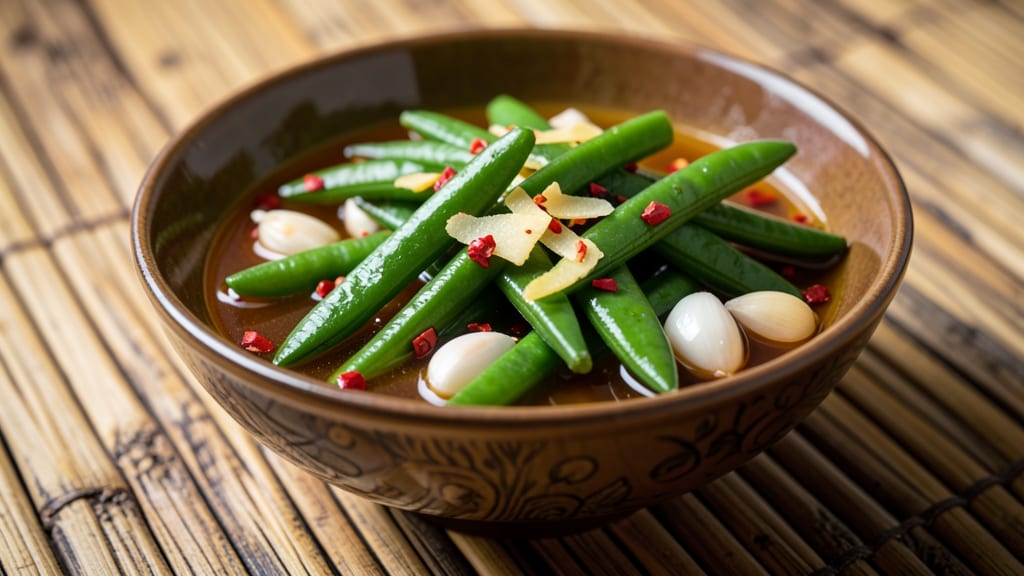
This Chinese pickled green bean recipe transforms simple green beans into crunchy, vinegar-bright bites that add tangy contrast to any meal. The secret lies in the quick pickling process—just 10 minutes of active work—where garlic, ginger, and chili create a flavor bomb that lingers long after the first bite.
I first discovered this technique while dining at a Shanghai street stall, where the crisp texture and bold flavors made them impossible to resist.
The beauty of these pickled green beans is their versatility—they elevate everything from dumplings to grilled meats, or even stand alone as a refreshing snack. Traditional methods rely on vinegar, sugar, and spices, but this recipe streamlines the process without sacrificing authenticity.
The key is using fresh green beans (never frozen) and cutting them uniformly for even pickling.
What you’ll end up with is a jar of glossy, crunchy beans bursting with garlic, ginger, and a hint of chili heat. The vinegar brightens the natural sweetness of the beans while preserving their satisfying crunch.
These beans keep for weeks in the fridge, making them perfect for meal prep or gifting. Let’s get started on this foolproof, restaurant-quality side dish that’s ready in under 15 minutes total.
Pair them with steamed rice, stir-fried meats, or serve as a palate-cleansing appetizer. The possibilities are endless—once you try them, you’ll never buy store-bought pickled vegetables again. This recipe delivers authentic Chinese flavors with minimal effort, proving that quick sides can be just as impressive as the main course.
Ingredients for chinese pickled green bean
Fresh green beans meet bold Chinese spices for a quick-pickled side dish bursting with garlic, ginger, and vinegar brightness.
| Ingredient | Amount | Notes |
|---|---|---|
| Fresh Green Beans 🌱 | 1 ½ lb | Harvest-size, trimmed ends |
| White Vinegar 🍶 | 1 cup | Distilled, 5% acidity preferred |
| Granulated Sugar 🍚 | ½ cup | White or raw cane sugar |
| Garlic Cloves 🧄 | 6 cloves | Thinly sliced, peeled |
| Fresh Ginger 🌿 | 1 tbsp | Finely grated, peeled |
| Red Chili Flakes 🌶️ | 1 tsp | Adjust for heat preference |
| Diamond Crystal Kosher Salt 🧂 | 1 tsp | Fine grain preferred |
| Star Anise Pods 🌟 | 2 whole | Lightly crushed for aroma |
| Sesame Seeds 🌰 | 1 tbsp | Toasted for garnish |
| Toasted Sesame Oil 🫒 | 1 tbsp | For finishing drizzle |
| Fresh Cilantro 🌿 | ¼ cup | Chopped, for garnish |
The quality of green beans makes all the difference here—look for harvest-size beans with vibrant green color and crisp texture. Local farmers markets often carry the freshest options, but the produce section at Whole Foods or Trader Joe's will have reliable quality. Trim the ends cleanly with a sharp knife, but avoid cutting the beans themselves to preserve their structural integrity. For the vinegar, distilled white vinegar provides the cleanest acidity, while apple cider vinegar adds subtle sweetness if you prefer a milder flavor profile. The sugar should be granulated or raw cane—never powdered, as it dissolves unevenly and can create graininess in the finished product.
No fresh ginger? Ground ginger at half the amount works in a pinch, though the texture differs. Substituting garlic powder loses the essential aromatic depth, so garlic-infused oil is the next best option. Star anise pods can be omitted if unavailable, but the warm licorice note they provide is worth tracking down—Penzeys Spices carries them in bulk. For heat adjustment, Sichuan peppercorns add numbing spice, while gochugaru (Korean chili flakes) provide a sweeter heat. The sesame oil should be toasted, not regular—it carries the nutty aroma that complements the pickling process perfectly. If you're short on time, pre-toasted sesame seeds from the Asian aisle will save you a few minutes.
These pickled green beans develop their best flavor after 24 hours of refrigeration, though they're ready to eat immediately. Store in an airtight glass jar with the liquid fully covering the beans to maintain crispness. They'll keep for up to 4 weeks in the refrigerator, with the flavor intensifying over time. For meal prep, portion into small containers—these beans make an excellent snack, appetizer, or side dish that elevates everything from dumplings to grilled proteins. The sesame seeds and cilantro should be added fresh just before serving to preserve their vibrant colors and aromas.
Why You'll Love This Recipe
- No-Chop Needed: I swear by this trick—just trim the ends of the green beans and snap them in half. No knife skills required, and the vinegar does the rest of the work while you sip tea.
- Tangy-Sweet Magic: That balance of vinegar’s sharp bite with sugar’s caramelized edge? It’s like a flavor rollercoaster in your mouth. The garlic and ginger sneak in warmth without overpowering—honestly, my picky eaters ask for seconds.
- Party Snack Star: Serve it warm or cold, straight from the jar. It’s the ultimate crowd-pleaser: elegant enough for dinner parties but simple enough to toss in a lunchbox. (Yes, even on a Tuesday night.)
- Jarred Treasure: Make a big batch—it keeps for weeks in the fridge. A dollar’s worth of beans becomes a pantry staple I grab for stir-fries, rice bowls, or just munching straight up. Budget win.
Step-by-step instructions for Chinese pickled green beans
Here's how to transform fresh green beans into vibrant, crunchy pickles with bold Asian flavors.
Prepare the Green Beans for Pickling
Begin by trimming the ends from the 1.5 lb of fresh green beans, leaving them whole or cutting them into 2-inch lengths if you prefer smaller pieces. I like to snap them by hand rather than using a knife—it preserves their natural crispness better. Rinse them thoroughly under cold water and drain completely in a colander.
Transfer the drained green beans to a large mixing bowl. Add the 1 tbsp of finely grated fresh ginger and the 6 cloves of thinly sliced garlic cloves. Toss gently but thoroughly to ensure each bean is coated with these aromatic ingredients. The ginger will add a subtle warmth while the garlic provides depth of flavor that penetrates the beans during the pickling process.
Create the Vinegar Brine Mixture
In a medium saucepan, combine the 1 cup of white vinegar, 0.5 cup of granulated sugar, 1 tsp of diamond crystal kosher salt, and the 2 lightly crushed star anise pods. Bring this mixture to a gentle simmer over medium heat, stirring occasionally until the sugar and salt dissolve completely. This typically takes about 3-4 minutes.
Remove the pan from heat and let the mixture cool for 5 minutes. The star anise will infuse its distinct licorice-like aroma into the brine, which is essential for authentic Chinese pickled green beans. While cooling, you'll notice the mixture becomes slightly syrupy—this helps create the perfect balance of tangy, sweet, and savory flavors in the final product.
Combine and Pack the Pickles
Pour the cooled vinegar mixture over the green beans in the mixing bowl. Add the 1 tsp of red chili flakes and toss everything together until the beans are evenly coated. The chili flakes will provide a subtle heat that complements the other flavors beautifully—adjust to taste if you prefer more or less spice.
Transfer the green beans to a clean, airtight glass jar or container, pressing down gently to remove any air bubbles. The beans should be completely submerged in the vinegar mixture. If they're not fully covered, add a bit more vinegar from the original 1 cup amount to ensure proper preservation and flavor infusion.
Rest and Develop Flavors
Seal the jar tightly and let the pickled green beans rest at room temperature for 10 minutes. This initial resting period allows the flavors to begin melding together. After 10 minutes, transfer the jar to the refrigerator where the pickles will continue to develop their vibrant flavors over the next 2-4 hours.
The longer they sit in the refrigerator, the more the green beans will absorb the tangy, sweet, and aromatic qualities of the vinegar mixture. For best results, let them sit for at least 4 hours before serving. When ready to eat, drizzle with 1 tbsp of toasted sesame oil and sprinkle with 1 tbsp of toasted sesame seeds and 0.25 cup of chopped fresh cilantro for a beautiful presentation and additional nutty, herby notes.
Pro Tips For Making Chinese Pickled Green Bean
- BLANCH BEANS UNTIL AL DENTE: The beans should sink like a stone but still have a tiny bite—overcooking turns them mushy, and undercooking leaves them crunchy. I learned this the hard way when a batch turned to green paste; test one immediately after blanching.
- SLICE GINGER THINLY: Skip the peeling—just scrub the ginger and slice it paper-thin with a sharp knife. Thick chunks stay chewy and ruin the texture, while thin slices dissolve perfectly into the brine.
- USE COLD VINEGAR FOR BRINE: Mix the vinegar, sugar, and aromatics in a cold jar—hot liquid speeds up fermentation and makes the beans soggy faster. My grandmother swore by this, and she was right: patience here means crunchier beans later.
- STORE IN GLASS, NOT PLASTIC: Mason jars let you see the beans and keep them fresh for weeks. Plastic traps odors and makes the vinegar smell funky after a few days—I know, I tried it. Glass also lets you layer flavors better over time.
Regional styles of this recipe
Shanghai Street Style
This is the version I first tasted at a bustling Shanghai street stall, where vendors sold these pickles from large glass jars. The key difference here is the addition of 1 tbsp of toasted sesame seeds mixed directly into the brine before packing the beans.
This creates a nutty depth that's essential for authentic street-style flavor. Serve these with steamed buns (bao) or as a topping for xiao long bao—the contrast of warm dough and tangy pickles is unbeatable. 🌶️
Sichuan Spicy Twist
For a fiery Sichuan-inspired version, swap the red chili flakes for 1 tsp Sichuan peppercorns (lightly toasted and crushed) plus 1 tsp gochugaru. The numbing spice from Sichuan peppercorns creates a unique sensory experience that pairs perfectly with mapo tofu or dan dan noodles.
I recommend using Lao Gan Ma brand Sichuan peppercorns for authentic heat. Add ½ tsp ground white pepper to the brine for extra complexity.
Cantonese Crispy Style
In Cantonese cuisine, these pickles are often served as a refreshing appetizer or side with dim sum. The secret here is using extra-firm green beans (like Romanesco beans) and reducing the vinegar slightly to ¾ cup while increasing sugar to ⅓ cup for a sweeter profile.
Garnish with crispy fried shallots before serving—this adds a textural contrast that's pure Cantonese restaurant quality. Pair with char siu (Chinese BBQ pork) for a classic combo. 🥢
Modern Fusion Approach
For a contemporary twist, try a kimchi-inspired version by adding 2 tbsp gochujang and 1 tsp fish sauce to the brine. This creates a umami-rich profile that works beautifully with grilled meats or rice bowls.
I also like to add ½ cup thinly sliced scallions to the jar for extra crunch. The fish sauce adds depth without overpowering the delicate green beans—just be sure to taste and adjust the saltiness accordingly.
Northern Chinese Plain Style
In Northern China, particularly Beijing, these pickles are often simpler with less spice. Reduce the chili flakes to ½ tsp and omit the star anise, replacing it with 1 tsp fennel seeds for a more subtle anise-like flavor.
This version pairs perfectly with Peking duck or jiaozi (dumplings). The cleaner flavor lets the natural sweetness of the beans shine through. For extra authenticity, serve with hoisin sauce on the side.
Taiwanese Sesame Bomb
Taiwanese home cooks often make these pickles with an extra 2 tbsp of toasted sesame oil in the brine and a generous sprinkle of black sesame seeds on top. The result is a deeper, nuttier flavor that complements Taiwanese beef noodle soup or stinky tofu beautifully.
I like to add ½ tsp five-spice powder to the brine for that signature Taiwanese warmth. The black sesame seeds add visual contrast and a delightful crunch when eaten. 🌰
Nutrition facts
Frequently asked questions
Can I use frozen green beans for this recipe?
Fresh green beans are ideal because they hold their crisp texture better, but you can use frozen in a pinch. Thaw them completely first, then pat them very dry to prevent excess moisture from diluting the vinegar brine. The texture will be slightly softer than fresh, but the flavor will still be delicious. For best results, use high-quality frozen beans without ice crystals.
How long do these pickled green beans keep?
When stored properly in an airtight jar in the refrigerator, these pickled green beans will stay fresh for 4-6 weeks. The flavor actually improves over time as the beans absorb more of the tangy, aromatic vinegar mixture. For longer storage, you can freeze them for up to 3 months, though the texture may become slightly softer after thawing.
Can I adjust the spice level?
Start with the 1 tsp of red chili flakes, but you can reduce to ½ tsp for mild or increase to 1.5 tsp for extra heat. For a different kind of spice, try ½ tsp Sichuan peppercorns (toasted and crushed) for that signature numbing heat. Always taste the brine before packing the beans to adjust to your preference.
What's the best way to store them for maximum crunch?
Keep them submerged in the vinegar brine at all times in an airtight glass jar. The acidity helps preserve their crispness. If the beans aren't fully covered, add more vinegar from your original batch. For extra crunch, press down gently on the beans before sealing. They'll stay crispest for the first 2-3 weeks—after that, the texture softens slightly but the flavor remains excellent.
How can I use these pickled green beans beyond side dishes?
These versatile pickles work beautifully as a topping for steamed buns, a crunchy addition to ramen or noodle bowls, or a refreshing garnish for grilled meats. They also make an excellent snack straight from the jar! Try adding them to spring rolls or fried rice for an authentic Chinese flavor boost. The tangy contrast works wonderfully with rich, fatty foods like Peking duck or char siu.