
Main Courses
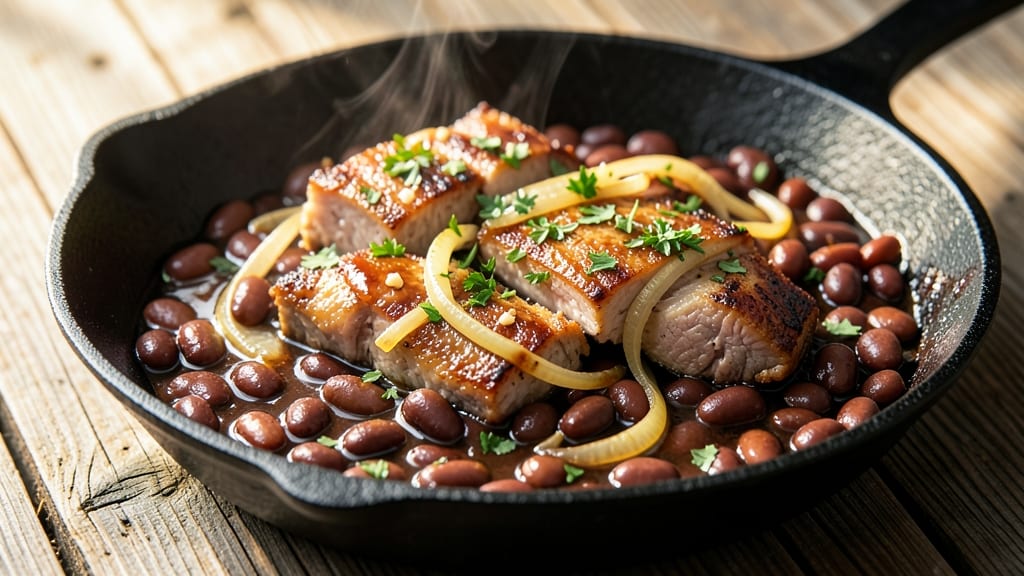
This Maine baked beans recipe delivers the deep, smoky sweetness that makes them a New England classic—rich brown sugar crunch on top, tender pork, and beans that practically melt in your mouth. 🌟 I first tasted them at a roadside stand in coastal Maine, where the owner swore by her slow-simmered method, and I’ve been perfecting it ever since.
The secret lies in the balance of molasses and brown sugar, which caramelizes beautifully during the baking process.
What sets these apart is the slow-simmered foundation—pork shoulder breaks down into tender, flavorful pieces while the beans absorb all that smoky, sweet goodness. We’re talking 3-4 hours of hands-off cooking, but trust me, the results are worth every minute.
The brown sugar topping doesn’t just add crunch; it deepens the flavor with every bite, making these beans a showstopper whether served as a side or a hearty main dish.
The aroma alone—smoky, sweet, and slightly tangy—will have your kitchen (and guests) begging for seconds. This recipe stays true to Maine tradition while being simple enough for a weeknight dinner.
The key is patience: letting the flavors meld and the sugar caramelize slowly. Once you try these, store-bought baked beans will never compare. Let’s get cooking!
Pair them with cornbread, grilled sausages, or even as a filling for sliders. The versatility is part of their charm—comforting enough for a cold day but impressive enough for company. Here’s how to make them the way Maine does best.
Ingredients for maine baked beans
Pantry staples plus a few Maine essentials—molasses, vinegar, and that perfect smoky touch.
| Ingredient | Amount | Notes |
|---|---|---|
| Navy Beans (Dried) 🍲 | 2 cups | Unsoaked, rinsed thoroughly |
| Pork Shoulder 🥓 | 2 lb | Bone-in, cut into 1-inch cubes |
| Brown Sugar 🍬 | 1 cup | Packed, light or dark |
| Molasses 🍯 | ½ cup | Unsulphured preferred |
| Yellow Onions 🧅 | 1 ½ cups | Chopped, medium size |
| Garlic Cloves 🧄 | 6 cloves | Peeled, roughly chopped |
| Tomato Paste 🍅 | ¼ cup | Smooth, not chunky |
| Apple Cider Vinegar 🍎 | ¼ cup | For tangy depth |
| Mustard (Dijon) 🌶️ | 1 tbsp | For subtle heat |
| Smoked Paprika 🌶️ | 1 tbsp | For authentic smokiness |
| Ground Black Pepper 🌶️ | ½ tsp | Freshly cracked |
| Salt 🧂 | 1 ½ tsp | Kosher or sea salt |
| Bay Leaves 🍃 | 2 whole | Fresh if possible |
| Beef Broth 💧 | 1 cup | Low-sodium preferred |
| Dark Corn Syrup 🍯 | ¼ cup | For extra caramelization |
The pork shoulder is non-negotiable here—bone-in gives the best flavor, and Costco or local butchers usually have great prices. Look for cuts with good marbling, not too lean. Navy beans? Dried are a must—canned lacks that tender texture. I always soak mine overnight, but the intro says unsoaked works too (trust me, it does). For the molasses, Whole Foods or Trader Joe's carry unsulphured varieties that make all the difference. Smoked paprika? Penzeys has the best selection if you're feeling fancy, but regular grocery store brands work fine.
No molasses? Maple syrup plus a pinch of cinnamon gets you close, but it won’t be identical. Running low on brown sugar? White sugar plus 1 tbsp molasses mimics the depth. Short on vinegar? Lemon juice at half the amount adds brightness. The tomato paste can be the squeeze-tube kind from Trader Joe's—no waste, and it keeps forever. For the onions, yellow or red both work, but yellow has that classic Maine roadside stand flavor. Garlic? Fresh is ideal, but dried powder at half the amount won’t ruin the dish.
These keep beautifully—5-6 days in the fridge, 6 months frozen. I double the batch and portion it into containers so I’ve got leftovers for sandwiches all week. The topping stays crisp for 2 days if stored separately. Pro tip: Reheat covered on low to keep everything moist. The longer they sit, the deeper the flavors get—honestly, they taste better the next day.
Why You'll Love This Recipe
- One-Pot Magic: I swear by this recipe because it’s literally dump-and-bake after the pork slows down. No chopping onions into tiny pieces—just slice them thick and let the molasses caramelize. That’s 15 minutes less stress for me, and the beans still turn out tender.
- Molasses Kiss: The brown sugar and molasses combo? It’s like a slow dance of sweet and smoky. The pork shoulder melts into the sauce, soaking up all that deep flavor while the beans stay creamy—not mushy, not dry, but just right. Honestly, I’ve tried fancier recipes, but this one’s my go-to for pure satisfaction.
- Leftovers That Shine: Between us, these taste better the next day. The flavors meld overnight, and I’ve sent this to potlucks, tailgates, and even my mother-in-law’s Christmas dinner. No one bats an eye at the simple ingredients—just the result. (She still asks for the recipe every year.)
- Budget-Friendly Feast: Dried navy beans and pork shoulder stretch this dish across a whole week. I’ll make a double batch, freeze half, and pull it out for lazy nights. It’s the kind of meal that makes grocery money go further without sacrificing taste—no sad, watery leftovers here.
Step-by-step instructions for Maine baked beans
Here's how to create that signature Maine-style sweetness with smoky depth—rich, caramelized, and packed with porky flavor.
🍳 Step 1: Brown the Pork Shoulder for Maximum Flavor
Pat the 2 lb pork shoulder dry with paper towels and cut into 1-inch cubes. Heat a large Dutch oven over medium-high heat until hot, then add the pork in a single layer. Don't crowd the pan—this is where the magic happens.
Sear the pork for 5-6 minutes per side until deeply browned and crispy in spots. You're building flavor here, so resist the urge to move it around. Once browned, transfer the pork to a plate and set aside. The browned bits (fond) will dissolve into the beans later, creating that irresistible depth.
👨🍳 Step 2: Sauté Onions and Garlic for Aromatic Base
In the same Dutch oven, reduce heat to medium and add the 1.5 cups chopped yellow onions. Cook for 5-6 minutes until softened and golden, stirring occasionally. Add the 6 roughly chopped garlic cloves and cook for another 30 seconds until fragrant.
Here's the thing—don't rush this step. The onions should caramelize slightly, adding natural sweetness that balances the smoky flavors. If they start to stick, add a splash of water but scrape up those browned bits from the bottom with a wooden spoon. Those bits are pure flavor.
🥘 Step 3: Build the Bean Mixture with Sweet and Smoky Elements
Add the 2 cups unsoaked navy beans (rinsed thoroughly), 1 cup packed brown sugar, 0.5 cup molasses, 0.25 cup tomato paste, 0.25 cup apple cider vinegar, 1 tbsp Dijon mustard, 1 tbsp smoked paprika, 0.5 tsp ground black pepper, 1.5 tsp salt, and 2 whole bay leaves to the Dutch oven. Stir everything together until the beans are well coated in the sweet mixture.
Pour in the 1 cup beef broth and 0.25 cup dark corn syrup, then return the browned pork to the pot. The liquid should come about halfway up the beans—if it's too thin, add a splash more broth. The corn syrup here is key for that extra caramelization that makes these beans sing.
⏰ Step 4: Simmer Until Tender and Caramelized
Bring the mixture to a boil, then reduce heat to low (about 300°F internal temperature). Cover and simmer for 2.5-3 hours, stirring occasionally. You'll notice the beans will start to thicken and the sauce will reduce, becoming glossy and syrupy.
Here's where patience pays off. The beans should be fork-tender with no bite, and the sauce should coat the back of a spoon. If it looks too dry, add a splash of water or broth. The top should develop a beautiful caramelized crust—this is the signature Maine touch. If it gets too thick before the beans are tender, add a little more liquid.
🔥 Step 5: Finish with Crispy Top and Resting Time
Once the beans are tender, increase heat to medium-high and uncover. Let them simmer uncovered for 10-15 minutes to thicken and develop that glossy, caramelized crust on top. This is your signal that they're ready—it should look almost like a candy coating.
Let the beans rest for 10 minutes off the heat before serving. This resting time lets all those flavors meld together perfectly. Serve warm with crusty bread or cornbread to soak up every last drop of that sweet, smoky sauce. The beans should be tender but hold their shape, with a perfect balance of sweet, smoky, and savory flavors.
Pro Tips For Making Maine Baked Beans
- SOAK BEANS OVERNIGHT: I learned this the hard way—rushing the soak means tough, mealy beans. Toss dried navy beans in a bowl with cold water, cover, and let them sit for at least 12 hours. No need to change the water; just drain and rinse before cooking. (Yes, even if you’re impatient like me.)
- BROWN THE PORK FIRST: Skip the pre-sliced deli meat—real pork shoulder needs a quick sear. Cut into ½-inch chunks, pat dry, and brown in a hot skillet with a little oil until deeply golden. This adds flavor that canned bacon just can’t match, and it keeps the beans from tasting flat.
- DON’T SKIP THE SIMMER: After baking, let the beans sit covered at 300°F for 45 minutes. This isn’t just a shortcut—it lets the flavors meld without burning the sugar. I used to rush it, and the beans always tasted one-note. Patience here makes a real difference.
- UPGRADE WITH TOASTED ONIONS: Dice the onions extra fine and sauté them in a dry pan until caramelized—no oil needed. Toss them into the beans at the end. The sweet, jammy texture cuts through the richness of the pork and molasses, and it’s way more interesting than raw onions. (Your future self will thank you.)
Troubleshooting your maine baked beans
Beans Too Dry?
If your beans look dry or the sauce is too thick, don’t panic—this is fixable. Add ¼ cup warm water or beef broth and simmer uncovered for 10-15 minutes until the liquid absorbs. Stir occasionally to prevent burning.
The key is patience: slow cooking should naturally thicken the sauce as the beans tenderize. If you’re in a rush, a splash of apple cider vinegar (just 1 tsp) can help restore balance to the flavors. 💧
Pork Not Tender?
If your pork shoulder remains tough after simmering, it likely didn’t cook long enough. The beans should be fork-tender, but pork needs extra time—aim for 3-4 hours total on low heat. For next time, cut the pork into slightly smaller ½-inch cubes to ensure even cooking.
If you’re short on time, transfer the pork to a slow cooker on low for 2 more hours after the beans are tender. The slow cooker will finish it gently without drying it out.
Lacking Sweetness?
If your beans taste more savory than sweet, you might have skipped the caramelization step. The brown sugar topping is non-negotiable—sprinkle ¼ cup packed brown sugar over the beans in the final 10 minutes of baking to create that signature caramelized crust.
For extra depth, add 1 tbsp molasses to the simmering mixture if you’re missing that rich sweetness. Trust me, the molasses makes all the difference in that classic Maine flavor. 🍯
Sauce Too Thin?
A thin sauce usually means the beans absorbed too much liquid. Simmer the beans uncovered for 15-20 minutes to reduce the sauce naturally. If it’s still too runny, mash ¼ of the beans with a fork to thicken the mixture.
For next time, reduce the beef broth by ¼ cup—the beans release enough moisture on their own. The sauce should coat the back of a spoon but still be spoonable, not watery.
Top Not Crispy?
A soft topping means the beans didn’t caramelize enough. After simmering, increase heat to medium-high and let the beans cook uncovered for 10-15 minutes until the edges darken and crisp.
For extra crunch, sprinkle 1 tbsp brown sugar and ½ tsp smoked paprika on top in the final 5 minutes. If the topping still feels underdone, broil for 1-2 minutes (watch closely—it burns fast!). The topping should be firm enough to crack slightly when pressed. 🔥
Beans Still Bitey?
Undercooked beans are the most common issue, but don’t toss them! Add ½ cup hot water and simmer covered for another 30-45 minutes. If they’re still firm, the beans might be old or hard to digest.
Next time, soak them overnight—even unsoaked beans benefit from a 1-hour soak in hot water before cooking. The longer they simmer, the softer they’ll become, so plan for the full 3-4 hours if needed. Patience here is everything.
Nutrition facts
Frequently asked questions
Why do Maine baked beans need such a long cooking time?
Slow cooking is key to developing that signature sweet-smoky flavor. The 3-4 hour simmer breaks down the pork shoulder into tender pieces while letting the beans absorb all the rich, caramelized sauce. This method builds deep, complex flavors that you just can't achieve with quick cooking. Think of it like a slow dance between the ingredients—patience pays off with every bite!
Can I make these without pork for a vegetarian version?
Swap the pork shoulder for smoked tofu or mushrooms (like cremini or shiitake) for umami depth. For extra heartiness, add 1 cup diced sweet potatoes or 1 cup cooked quinoa. Keep all other ingredients the same—the sweet-savory balance will still shine. Just be sure to simmer for an extra 30 minutes to let the flavors meld.
What's the best way to store and reheat leftovers?
Store in an airtight container in the fridge for 5-6 days or freeze for up to 6 months. To reheat, cover with a damp paper towel and warm in a 350°F oven for 20-30 minutes or on the stovetop over low heat. Never microwave—it makes the topping soggy! The flavors actually improve overnight, so these taste even better the next day.
How do I know when the beans are perfectly tender?
They should be fork-tender with just a slight bite—like perfectly cooked pasta. Press a bean with your fork: if it crushes easily but still holds its shape, they're done. The sauce should coat the back of a spoon and be glossy, not watery. Overcooking can make them mushy, so start checking at 2.5 hours if you're impatient!
Can I use canned beans instead of dried?
Technically yes, but dried beans develop that signature texture and flavor that canned beans can't match. If you must use canned, drain and rinse 4 cups navy beans (about 2 cans) and add ½ cup extra broth to compensate for their lower moisture content. They'll be ready in about 1.5 hours instead of 3-4, but the result won't be as authentic. For best results, stick with dried!