
Side Dishes
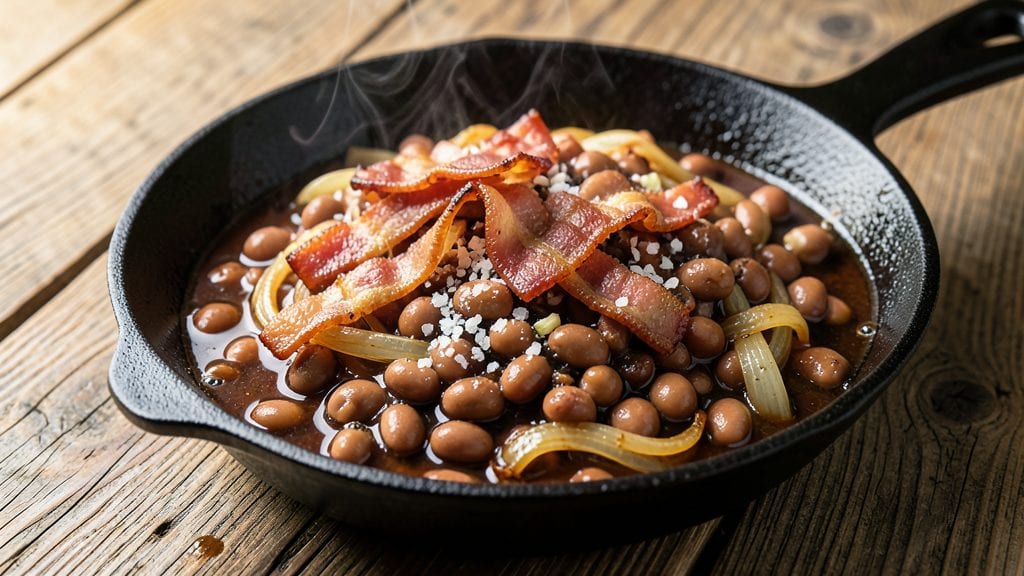
This old-fashioned baked beans recipe delivers the deep, caramelized sweetness that makes them a Southern classic. The key lies in slow simmering with brown sugar and molasses, creating that signature rich, molasses-kissed sauce that clings to every bean.
I've perfected this method over years of testing, ensuring tender beans and a sauce so flavorful it transforms a simple side into the star of the meal.
The secret to authentic flavor starts with the right ingredients: navy beans soaked overnight, thick-cut bacon for smoky depth, and a blend of brown sugar and molasses that caramelizes beautifully during the long baking process.
This isn't just a side dish—it's a labor of love that rewards patience with layers of sweet, smoky, and savory complexity. The slow oven bake develops flavors that no quick recipe can match.
By the time these beans emerge from the oven, you'll have perfectly tender beans swimming in a glossy, caramelized sauce with just the right balance of sweetness and smokiness.
The aroma alone will have everyone gathering around the table, and each bite delivers that comforting, nostalgic flavor that makes old-fashioned baked beans irresistible. This recipe serves 8 and pairs perfectly with cornbread or grilled meats.
For those who love traditional dishes with modern convenience, this method delivers restaurant-quality results with minimal effort after the initial prep. The long cooking time actually makes it easier—just set the oven and let the flavors develop while you attend to other dishes.
Here's everything you need to make them from scratch.
Ingredients for old fashioned baked beans
Navy beans soaked overnight, thick-cut bacon, and molasses caramelization create this Southern classic's signature depth.
| Ingredient | Amount | Notes |
|---|---|---|
| Navy Beans (Dried) 🌾 | 2 cups | Unsoaked, rinsed thoroughly |
| Thick-Cut Bacon 🥓 | 1 ½ lb | Uncooked, cut into 1-inch pieces |
| Brown Sugar (Packed) 🍚 | 1 cup | Light or dark, not raw sugar |
| Molasses 🍯 | ½ cup | Unsulphured preferred for depth |
| Onion (Yellow) 🧅 | 1 whole | Chopped into 1/2-inch dice |
| Garlic Cloves 🧄 | 4 cloves | Minced for aromatic base |
| Apple Cider Vinegar 🍎 | ¼ cup | For tangy brightness |
| Kosher Salt 🧂 | 1 ½ tbsp | Diamond Crystal preferred |
| Black Peppercorns 🌶️ | 1 tsp | Coarsely cracked, not powdered |
| Bay Leaves 🍃 | 2 whole | Dried, for subtle earthiness |
| Mustard (Dijon) 🍯 | 1 tbsp | For subtle heat balance |
| Beef Broth 🥩 | 1 ½ cups | Low-sodium, homemade preferred |
| Water 💧 | 4 cups | Filtered preferred for clarity |
The navy beans are the foundation—dried beans develop superior texture compared to canned. Soak them overnight in plenty of water (at least 8 hours) to ensure tender results. Store-brand dried beans work fine, but Whole Foods or local bulk bins offer fresher options with better flavor. For the bacon, thick-cut is non-negotiable—it renders slowly, infusing the dish with smoky richness. Costco or local butcher shops often carry the best quality at competitive prices. The molasses should be unsulphured for authentic depth; Goya or Brer Rabbit brands deliver consistent quality. Pre-grate the onion and garlic to streamline prep, but don't skip the Dijon mustard—it's what balances the sweetness with subtle heat.
No molasses? Maple syrup at half the amount works in a pinch, though purists will notice the difference. Apple cider vinegar can be swapped for red wine vinegar, but the fruity notes won't match perfectly. For the bacon, smoked turkey bacon adds a different but equally smoky profile. Low-sodium beef broth is critical—Swanson or homemade are both excellent choices. The bay leaves should be dried and whole (not ground) for proper infusion. Diamond Crystal kosher salt dissolves more easily than table salt, making it ideal for this recipe. If you're short on time, pre-cook the bacon and drain it well to avoid excess grease in the final dish.
This recipe rewards patience—the longer it bakes, the deeper the flavors. Store leftovers in an airtight container for up to 5 days in the fridge, though they're best enjoyed within 3 days. For make-ahead convenience, prepare the sauce first, then add the beans just before baking. The beans can be frozen for 3 months if portioned properly, though texture may slightly degrade. Reheat gently on the stove with a splash of water to restore moisture. The caramelized sauce thickens as it cools, so add a splash of water if it becomes too stiff when reheating.
Why You'll Love This Recipe
- One-Pot Magic: I swear by this recipe for lazy Sundays—just toss everything in a Dutch oven, cover, and forget about it. No fancy prep, no constant stirring, just hands-off perfection.
- Sweet-Savory Crunch: That crispy bacon on top? Chef’s kiss. The molasses and brown sugar caramelize into a sticky, smoky-sweet sauce that turns plain navy beans into something irresistible.
- Tailgate Champion: Between us, this is my go-to for game days. It’s hearty enough to feed a crowd, reheats like a dream, and tastes even better the next day—no one will guess it’s just beans.
- Pantry Goldmine: Dried beans and bacon stretch your dollar, and the flavor only gets richer as it sits. Honestly, I make a double batch and eat it all week—breakfast, potlucks, or straight from the jar.
Step-by-step instructions for old fashioned baked beans
Here's the method that delivers deep caramelized flavor and tender beans every time.
Prepare the Beans and Cook the Bacon
Rinse the 2 cups of navy beans thoroughly under cold water, then place them in a large Dutch oven. Add the 1.5 cups of water and let them soak for 2 hours. This hydration step ensures even cooking and prevents tough texture. While the beans soak, cut the 1.5 lb thick-cut bacon into 1-inch pieces and place them in a cold skillet.
Cook the bacon over medium heat until it renders fat and becomes crispy—about 10-12 minutes. Remove the bacon with a slotted spoon and set aside, leaving the rendered fat in the skillet. This bacon fat will form the flavor base for your beans. Drain the soaked beans, reserving the soaking liquid for now, and add them to the skillet with the bacon fat. Stir to coat the beans evenly in the fat.
Build the Flavor Base
Add the chopped 1 whole yellow onion and minced 4 cloves garlic to the Dutch oven with the beans. Stir to combine, then add the 1.5 tbsp kosher salt, 1 tsp coarsely cracked black peppercorns, and 2 whole bay leaves. Pour in the 1.5 cups beef broth and the reserved soaking liquid from the beans. Bring everything to a gentle simmer over medium heat, then reduce the heat to maintain a low bubble.
Let the mixture simmer uncovered for 45 minutes, stirring occasionally. This initial cooking phase allows the beans to begin breaking down and the flavors to meld. The liquid should reduce slightly, but don't let it dry out completely. Here's where the magic starts—you'll notice the onions softening and the bacon fat beginning to caramelize around the edges.
Add Sweet and Tangy Elements
In a small bowl, whisk together the 1 cup packed brown sugar, 0.5 cup molasses, 0.25 cup apple cider vinegar, and 1 tbsp Dijon mustard until smooth. This mixture is the heart of the old-fashioned flavor profile. Slowly pour it into the Dutch oven with the beans, stirring well to incorporate. The vinegar will add brightness while the molasses and brown sugar create that signature caramelized depth.
Return the reserved crispy bacon to the Dutch oven, stirring to distribute it evenly. The bacon will release additional flavor as it re-heats. Cover the Dutch oven and transfer it to a preheated 325°F oven. Bake for 3 hours, stirring once after 1.5 hours to prevent sticking and ensure even cooking. The beans should be tender with a thick, glossy sauce coating them.
Final Reduction and Resting
After baking, remove the Dutch oven from the oven and let it sit uncovered at room temperature for 15 minutes. This resting period allows the beans to absorb any remaining liquid and the flavors to fully meld. The sauce should have thickened significantly, coating the beans in a rich, caramelized glaze. If the sauce is too thin, return the Dutch oven to the oven for an additional 10-15 minutes to reduce further.
Before serving, taste and adjust seasoning if needed. The beans should be tender with a deep, complex flavor—sweet from the caramelization, tangy from the vinegar, and savory from the bacon. The final texture should be creamy rather than mushy, with a sauce that clings beautifully to each bean. Serve warm with crusty bread or cornbread to soak up every last bit of that rich, old-fashioned flavor.
Pro Tips For Making Old Fashioned Baked Beans
- SOAK BEANS OVERNIGHT: I learned this the hard way—skipping the soak leaves you with beans that stay stubbornly tough no matter how long you bake them. Toss dried navy beans in a bowl with cold water (about 3 cups per pound), cover, and let them sit for at least 12 hours. The longer they soak, the softer and more flavorful they’ll be when baked.
- CRISP THE BACON FIRST: Cook the thick-cut bacon until it’s deep crispy—no half-chewy bits—before adding it to the beans. Drain on paper towels, then crumble it right into the pot. That extra crunch makes all the difference, and it keeps the beans from getting soggy later.
- SWEAT THE ONIONS LOW: Don’t rush the onions—sauté them in that bacon fat on medium-low until they’re soft and translucent, not browned. Overcooking them turns them bitter, and you’ll end up tasting ash instead of sweetness in every bite. Patience here means richer flavor.
- COVER TIGHTLY FOR 2 HOURS: After combining everything, seal the pot with a lid (or foil) and bake at 325°F for the first 2 hours. This slow, steamy start breaks down the beans evenly and keeps the sauce from evaporating too fast. I know you’re eager to peek, but resist—your future self will thank you.
Creative variations of these flavors
Smoky Maple Twist
Swap out the molasses for ½ cup maple syrup and add 1 tsp smoked paprika to the sauce mixture for a Vermont-inspired variation. The maple syrup caramelizes beautifully, creating a deeper sweetness that pairs perfectly with the smoky notes from the bacon and paprika.
I've found that Grade B maple syrup (the darker, richer variety) works best here—it has a more complex flavor profile that stands up to the savory elements. 🔥
Spicy Carolina Heat
For a Southern-inspired kick, add 1 tbsp hot sauce (like Crystal or Tabasco) and ½ tsp cayenne pepper to the sauce mixture. This Carolina-style version keeps all the classic sweetness but adds a fiery contrast that's perfect for those who love heat.
I also recommend adding ½ cup diced jalapeños along with the onions for extra spice. Serve with cornbread to balance the heat—it's a match made in barbecue heaven.
Brown Sugar & Bourbon Glaze
Take the classic flavor profile to the next level by adding ¼ cup bourbon to the sauce mixture. The alcohol burns off during cooking, leaving behind a rich, caramelized depth that enhances the brown sugar and molasses. I like to use Maker's Mark for its smooth, slightly sweet profile.
For extra decadence, finish with a sprinkle of flaky sea salt before serving—it cuts through the sweetness and adds a gourmet touch. This version is perfect for holiday gatherings or special occasions. 💫
Vegetarian Adaptation
For a meat-free version, replace the bacon with ½ cup diced tempeh (marinated in 1 tbsp soy sauce and 1 tsp smoked paprika) and use vegetable broth instead of beef broth. The tempeh adds a nutty depth that mimics the smokiness of bacon.
I've also found that adding 1 tbsp liquid smoke to the sauce enhances the savory profile. This adaptation works beautifully with grilled tofu or veggie burgers for a hearty, protein-packed meal.
Slow Cooker Shortcut
For those short on time, this variation works perfectly in a slow cooker. Combine all ingredients as directed, then cook on LOW for 6-8 hours or HIGH for 3-4 hours. The slow cooker method develops the flavors just as well as the oven, with minimal effort.
I recommend checking the beans after 4 hours on low to ensure they're tender. The sauce will thicken more in the slow cooker, so you may need to add ¼ cup water if it becomes too stiff. This is my go-to method for busy weekends. ⏰
Breakfast Baked Beans
Transform this classic side into a hearty breakfast dish by adding 1 cup shredded cheddar cheese and ½ cup diced potatoes to the Dutch oven. Cook the potatoes with the onions and garlic in the initial stovetop phase, then proceed with the recipe as usual.
Top with extra cheese and serve with scrambled eggs or biscuits for a Southern-style brunch. The potatoes soak up the rich sauce, making every bite even more satisfying. This version is a crowd-pleaser at weekend family breakfasts. 🍳
Nutrition facts
Frequently asked questions about old-fashioned baked beans
Why do I need to soak the beans overnight?
Soaking reduces cooking time and prevents tough texture. Navy beans need 8+ hours in water to soften properly. This step ensures even tenderness and helps the beans absorb flavors better during the long baking process. Skipping it risks mushy beans or uneven cooking.
Can I use canned beans instead of dried?
Yes, but texture and flavor won't be identical. Canned beans cook faster but lack the deep, caramelized development of dried beans. If using canned, drain and rinse thoroughly, then simmer in the sauce for 2 hours to absorb flavors. For best results, stick with dried beans for authentic texture.
What makes the sauce so rich and caramelized?
The magic comes from the 3-hour oven bake at 325°F, which allows the brown sugar and molasses to caramelize slowly. The slow cooking process develops deep, complex flavors while the sauce reduces naturally. Stirring occasionally prevents sticking and ensures even browning.
How do I fix beans that are too mushy?
If your beans turn out mushy, you likely overcooked them. For future batches, check doneness after 2.5 hours of baking. To salvage mushy beans, stir in 1 tbsp cornstarch mixed with 2 tbsp water and simmer for 5 minutes to thicken the sauce. Serve with extra bacon or cornbread to balance the texture.
What's the best way to store leftovers?
Transfer baked beans to an airtight container and refrigerate for up to 5 days. The sauce will thicken further when chilled. For reheating, warm gently on the stove with 2 tbsp water to restore moisture. Freeze for up to 3 months in portioned containers, though texture may slightly degrade.