
Side Dishes
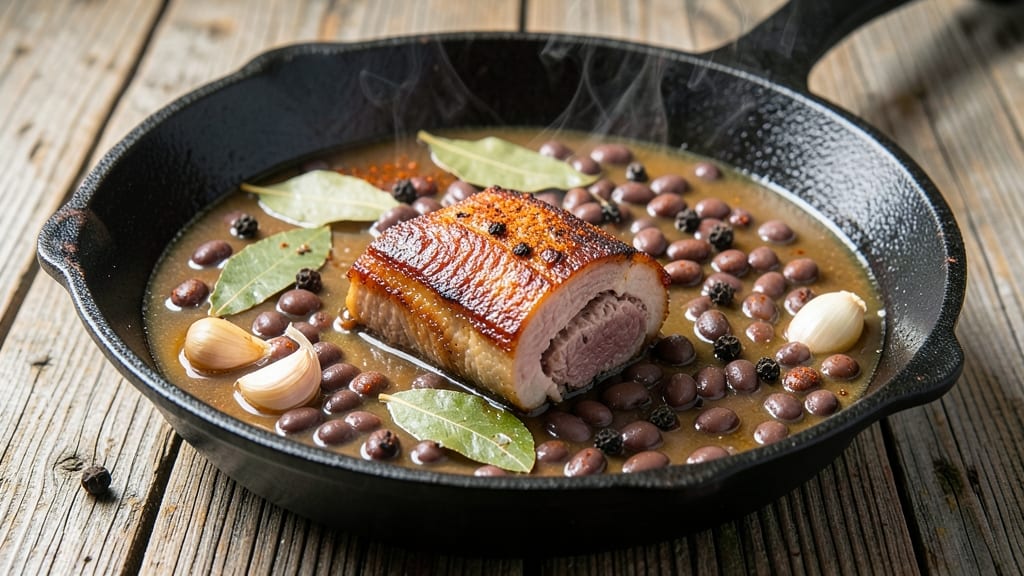
This old-fashioned ham hock and beans recipe delivers the soul-warming flavors of Southern comfort food that's been slow-simmered to perfection. The ham hock infuses the beans with deep, smoky richness while the beans soften into tender, flavorful bites—just like your grandmother used to make.
I've perfected this technique over years, ensuring every spoonful carries that authentic, hearty taste that makes it a staple at holiday tables.
The secret lies in the slow cooking process, where the ham hock and beans simmer together for hours, allowing flavors to meld and develop.
You'll start by preparing the ham hock—whether you boil it first or add it directly to the pot—before adding dried beans that soak overnight for the best texture.
Classic Southern spices like bay leaves, peppercorns, and a touch of smoked paprika work together to create a depth of flavor that's impossible to resist.
By the time you're done, you'll have a pot of beans that's tender yet substantial, with the ham hock falling apart into savory, melt-in-your-mouth pieces. The broth will be rich and aromatic, perfect for soaking up with every bite.
This dish is the kind of comfort food that turns a simple meal into a memorable experience, especially when served alongside cornbread or crusty bread.
Whether you're preparing for a family gathering or just craving a taste of tradition, this recipe delivers restaurant-quality results with minimal effort. The slow-simmered method ensures deep flavor layers that make it worth the wait, and the leftovers reheat beautifully for days of enjoyment.
Let's get started on this classic dish that brings warmth and tradition to your table.
Ingredients for old fashioned ham hock and beans
The heart of Southern comfort—just a ham hock, beans, and time.
| Ingredient | Amount | Notes |
|---|---|---|
| Ham Hock 🍖 | 2 whole | Uncooked, bone-in preferred |
| Dried Navy Beans 🌾 | 2 cups | Unsoaked, rinsed thoroughly |
| Smoked Paprika 🌶️ | 1 tbsp | For deep smoky flavor |
| Bay Leaves 🍃 | 2 whole | Fresh or dried |
| Black Peppercorns 🌶️ | 1 tsp | Crushed lightly |
| Garlic Cloves 🧄 | 4 cloves | Smashed for infusion |
| Onion 🧅 | 1 whole | Yellow, chopped coarse |
| Celery Stalks 🥬 | 3 whole | Chopped coarse |
| Carrots 🥕 | 2 whole | Chopped coarse |
| Salt 🧂 | 1 ½ tbsp | Kosher or sea salt |
| Apple Cider Vinegar 🍎 | 2 tbsp | For brightness |
| Water 💧 | 8 cups | For soaking beans |
| Butter 🧈 | 2 tbsp | Full-fat, for richness |
The ham hock is non-negotiable here—it's what gives those deep, smoky layers. Look for uncooked hocks at your local butcher or grocery store meat section. If you can't find them fresh, frozen works too. The beans? Dried navy beans are traditional, but pinto or great northern work in a pinch. Soak them overnight in plenty of water (about 8 cups) with a pinch of salt—the longer they soak, the more tender they'll get. I always use a big stockpot for this; it's a slow cook, and you'll want room to spare. The aromatics—onion, celery, and carrots—are your flavor base, so don't skimp on chopping them coarse.
No smoked paprika? Substitute with a mix of regular paprika and a dash of liquid smoke—just don't overdo it. Fresh bay leaves are ideal, but dried work fine if that's what you've got. The apple cider vinegar might seem odd, but trust me, it cuts through the richness and brightens everything up. Trader Joe's has a great organic version if you want to splurge. For the butter, full-fat is worth it here—it adds that silky finish to the broth. No butter? A little olive oil works, but it won't be quite the same. And if you're short on time, you can use a pressure cooker to cut the cooking time in half, though the flavor won't be as developed.
This dish tastes even better the next day—honestly, that's when it shines. Store leftovers in the fridge for up to 5 days, or freeze portions for 3 months. I like to portion it into containers so I can grab a serving anytime. The ham hock will fall apart as it cooks, so you can strain it out if you want cleaner beans, or leave it in for maximum flavor. The broth freezes beautifully too—just thaw and reheat for a quick soup. And if you've got cornbread on hand, you're in for a real treat.
Why You'll Love This Recipe
- Soak-and-Simplicity Magic: I swear by this recipe because the beans don’t need pre-soaking if you plan ahead—just toss them in cold water overnight. The ham hock does all the heavy lifting while you sip coffee in the morning.
- Smoky Depth in Minutes: That smoked paprika and bay leaves? They turn a simple pot of beans into something rich and complex—like a hug in a bowl. The peppercorns add a subtle kick that lingers.
- Weeknight Workhorse: This feeds a crowd but costs less than takeout. Serve it with cornbread for Sunday supper or reheat for lazy weeknights when you’d rather not think.
- Leftovers That Beg for More: The flavor actually improves the next day—honestly, I’ve eaten this cold straight from the fridge. It’s my go-to for packed lunches or when I forget to cook until 9 PM.
Step-by-step instructions for old fashioned ham hock and beans
Here's how to create that deep, smoky flavor and tender texture that makes this dish legendary.
Prepare the Ham Hock and Beans for Soaking
Start by rinsing the 2 whole ham hocks under cold water to remove any surface impurities. Pat them dry with paper towels and place them in a large stockpot. Add the 2 cups dried navy beans, 2 whole bay leaves, and 1 tsp black peppercorns to the pot with the ham hocks.
Pour in the 8 cups water, making sure the beans are completely submerged. If they float, gently press them down with a wooden spoon. Bring the mixture to a boil over high heat, then immediately reduce to a simmer. Cover the pot and let it soak for 1 hour. This initial soak helps soften the beans and begin extracting flavor from the ham hock.
After 1 hour, check the beans. They should be slightly softened but not fully cooked. If they're still rock-hard, continue simmering uncovered for another 30 minutes. The goal is to start the cooking process while keeping the beans intact for the long simmer ahead.
Build the Flavor Base with Vegetables and Seasonings
While the beans soak, chop the 1 whole onion, 3 whole celery stalks, and 2 whole carrots into coarse pieces. Add these to the pot with the ham hocks and beans. Stir in the 1 tbsp smoked paprika and 1.5 tbsp salt, making sure everything is well combined.
Crush the 4 cloves garlic lightly with the flat side of a knife to release their aroma. Add them to the pot along with the 2 tbsp apple cider vinegar. The vinegar adds brightness that cuts through the richness of the ham and beans. Bring the mixture back to a gentle simmer, ensuring all ingredients are submerged in the liquid.
Let the mixture simmer uncovered for 2 hours. This long cooking time allows the flavors to meld together and the beans to become tender. Stir occasionally to prevent anything from sticking to the bottom of the pot. You'll know it's ready when the beans are soft and the ham hock can be easily pulled away from the bone.
Finish with Butter for Richness and Texture
After 2 hours of simmering, remove the ham hocks from the pot and set them aside to cool slightly. Strain the bean mixture through a fine-mesh colander, pressing gently on the vegetables to extract all the flavorful liquid. Return the beans to the pot, discarding the solids.
Add the 2 tbsp butter to the pot and stir over medium heat until it melts completely. The butter adds a luxurious richness that balances the smoky, savory flavors. Taste the beans and adjust seasoning if needed, adding a pinch more salt or a splash of apple cider vinegar if desired.
Shred the cooled ham hocks using two forks, removing any large bones. Return the shredded ham to the pot and stir gently to combine. Let the mixture simmer for another 5 minutes to allow the flavors to meld fully. Serve the beans hot, accompanied by crusty bread to soak up every last bit of that flavorful broth.
Pro Tips For Making Old Fashioned Ham Hock And Beans
- SCOUR THE HOCK: Give that ham hock a good scrub with a stiff brush—especially under the skin folds—before simmering. I learned this the hard way after my first batch tasted like it had been cured in a barn. The extra effort removes grime and lets the smoky flavor shine through.
- SOAK BEANS COLD: Use ice water for your overnight soak—it cuts down on gas and speeds up cooking. Skip the warm water, even if you’re in a hurry. I tried the quick-soak method once and ended up with beans that were still tough after hours of simmering.
- CRACK THE POT LID: Let steam escape for the first 20 minutes—just lift the lid slightly or prop it open with a spoon. Navy beans expand like crazy, and a sealed pot guarantees a mess. After burning through three lids, I finally got the memo.
- BROWN THE BAY LEAF: Toast the bay leaves in the pot for 30 seconds before adding liquid—it deepens their aroma. Sounds weird, but it works: my grandmother swore by it, and the difference in flavor is noticeable, even in a rich ham-and-bean stew.
Essential equipment for perfect results
Stockpot Essentials
A large, heavy-bottomed stockpot (at least 8-quart capacity) is non-negotiable for this recipe. I recommend a stainless steel pot like the All-Clad D5 or a Le Creuset Dutch oven—both distribute heat evenly and prevent scorching.
If you're on a budget, a Calphalon stainless steel pot works beautifully. The deep sides accommodate the beans and ham hock while allowing room for expansion during the long simmer. 🔥
Precision Thermometer
While this isn't a high-tech recipe, a meat thermometer ensures your ham hock reaches the perfect internal temperature. I use a Thermoworks Smoke—it's affordable and reliable. Insert the probe into the thickest part of the ham hock (avoiding bone) and monitor as it cooks.
The ideal internal temp is 195°F, where the meat becomes tender and falls apart effortlessly. This prevents overcooking while ensuring maximum flavor extraction.
Fine-Mesh Strainer
A fine-mesh colander (like the OXO Good Grips) is critical for straining the beans after simmering. It removes the vegetable solids while preserving the flavorful broth. If you don't have one, a cheesecloth works in a pinch, but it requires more effort.
Pressing the vegetables gently with a wooden spoon extracts every last drop of flavor—don't skip this step! The strained beans will be creamier and more cohesive. 💫
Wooden Spoon
Never use metal utensils when cooking ham hock and beans—they can scratch your pot and react with acidic ingredients like apple cider vinegar. A long-handled wooden spoon (I love the OXO Good Grips) is perfect for stirring, scraping the bottom, and preventing sticking.
Wood also adds a subtle, warm flavor to the dish over time. If you don't have wood, a silicone spatula is a good alternative.
Butter Knife for Shredding
After cooking, you'll need to shred the ham hock, and a sharp butter knife is the best tool for the job. Slide it between the meat and bone to separate cleanly, then use two forks to pull the meat into shreds.
A Dexter-Russell 8-inch knife is ideal, but any sturdy, sharp knife works. Avoid dull knives—they crush the meat instead of slicing it neatly. This step ensures every bite includes tender, flavorful ham pieces. 💪
Optional: Slow Cooker
For a hands-off approach, a 6-quart slow cooker (like the Crock-Pot SCCPV600) simplifies the process. Add all ingredients except the butter, cook on LOW for 8 hours or HIGH for 5 hours, then finish with butter and shredded ham.
The slow cooker maintains consistent temperature, but the flavor depth won't match a stovetop simmer. If you choose this route, skip the initial hour-long soak and add the beans directly to the slow cooker with all other ingredients.
Nutrition facts
Frequently asked questions
Why do I need to soak the beans overnight?
Soaking beans overnight reduces cooking time and prevents them from staying rock-hard. The long soak (8+ hours) softens the beans' tough outer skins, allowing them to absorb flavors better during the slow simmer. For this recipe, the overnight soak is worth it—it ensures tender beans with maximum flavor infusion from the ham hock.
Can I substitute smoked paprika if I don't have it?
Yes! Mix 1 tbsp regular paprika with ½ tsp liquid smoke for a similar effect. If you're avoiding smoke entirely, add an extra ½ tsp of garlic powder and ¼ tsp onion powder to compensate. The key is balancing the smoky depth—don't skip the vinegar, as it brightens the dish.
How do I know when the ham hock is fully cooked?
Use a meat thermometer to check for 195°F internal temperature (avoiding bone). The meat should easily pull apart with a fork. If you don't have a thermometer, look for these signs: the broth will be rich and opaque, and the meat will separate cleanly from the bone when pressed gently.
Can I make this recipe in a pressure cooker?
Use a 6-quart pressure cooker on high pressure for 30 minutes after the initial soak. Release pressure naturally, then finish with butter and shredded ham. The beans will cook faster, but the flavor depth won't match the slow-simmered version. For best results, extend cooking to 45 minutes for richer taste.
What's the best way to reheat leftovers?
Gently reheat on the stove over low heat with a splash of water or broth to prevent drying. Microwave in 30-second bursts, stirring between each, to avoid rubbery beans. Never reheat straight from the fridge—always bring to room temperature first. The broth will thicken slightly, so add a little water if needed.