
Side Dishes
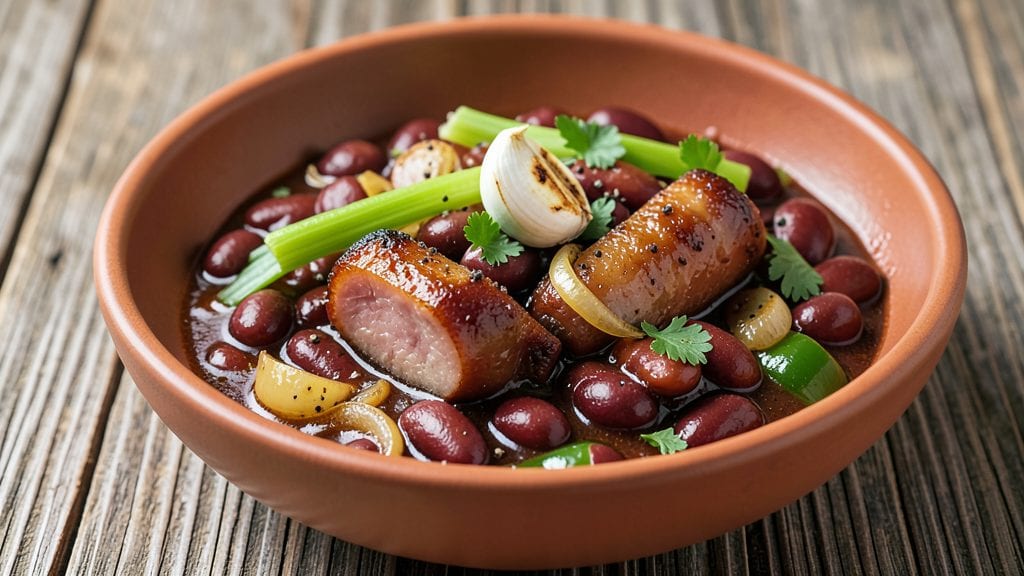
This red beans and ham hocks recipe delivers the soulful, smoky depth of a Sunday supper—exactly the kind Mrs. Henderson used to make when the whole neighborhood gathered for church potlucks.
The secret lies in slow-simmering the beans with ham hocks until the meat falls off the bone, infusing the dish with rich, gelatinous flavor that transforms simple ingredients into something unforgettable.
Unlike quick weeknight meals, this recipe rewards patience—8 hours of gentle simmering builds layers of umami that store-bought seasonings can never match. I learned the hard way that rushing this dish dilutes its magic, so we'll let the flavors meld while you tend to other preparations.
The result? A pot so flavorful you'll want to serve it straight from the Dutch oven, crusty bread and all.
What makes this version special is the balance of smoky ham hocks, tender beans, and just enough heat from cayenne to wake up the palate.
The ham hocks don't just flavor the beans—they become part of the dish, their collagen melting into the broth for a velvety texture that feels like a hug in a bowl. This isn't just a side; it's the centerpiece of any Southern feast.
Perfect for game days, holiday gatherings, or when you're craving that deep, comforting flavor that only slow cooking can deliver. The leftovers? Even better the next day, if you can resist eating the whole pot. Let's get started—your kitchen will smell like Sunday supper in no time.
Ingredients for red beans and ham hocks
Pantry staples meet soulful slow cooking for a dish that tastes like Sunday supper.
| Ingredient | Amount | Notes |
|---|---|---|
| Dried Red Kidney Beans 🌱 | 2 cups | Unsoaked, rinsed well |
| Ham Hocks 🍖 | 2 whole | Smoked, about 1 lb each |
| Yellow Onion 🧅 | 1 whole | Medium, chopped |
| Celery Stalks 🥬 | 3 whole | Fresh, chopped |
| Green Bell Pepper 🌶️ | 1 whole | Medium, chopped |
| Garlic Cloves 🧄 | 4 cloves | Fresh, minced |
| Smoked Paprika 🌶️ | 2 tbsp | High quality, not sweet |
| Dried Thyme 🌿 | 1 tbsp | Or 1 tsp fresh |
| Ground Black Pepper 🌶️ | 1 tsp | Freshly ground |
| Cayenne Pepper 🔥 | ½ tsp | Adjust for heat |
| Sea Salt 🧂 | 1 ½ tbsp | Kosher preferred |
| Liquid Smoke 💨 | 1 tbsp | Optional, for extra smokiness |
| Water 💧 | 8 cups | Or low-sodium broth |
| Fresh Parsley 🌿 | ¼ cup | Chopped, for garnish |
The ham hocks are the heart of this recipe. Look for smoked ham hocks at your local butcher or grocery store's meat counter—Whole Foods or Kroger usually carry them. If you can't find smoked, regular ham hocks still work but won't have that deep, campfire-like flavor. The beans? Dried red kidney beans are a must—they hold their shape and soak up all that smoky goodness. I always buy mine in bulk from WinCo or Costco to save money, but any grocery store has them. The key is to rinse them well before cooking to remove any dust or debris.
No smoked paprika? Regular paprika plus a dash of liquid smoke gets you close. Fresh thyme is ideal, but dried works fine at one-third the amount. The bell pepper can be any color—red or yellow if you prefer a sweeter note. Short on celery? Substitute with more onion or a splash of celery salt. The cayenne is where you can play—start with half a teaspoon and add more to taste. For extra depth, Trader Joe's smoked salt adds a nice touch without much effort. And if you're feeling fancy, a splash of hot sauce at the end ties everything together.
This dish tastes even better the next day—4-5 days in the fridge, honestly. The flavors meld like magic. For freezing, portion into containers and store for up to 3 months. I like to make a big batch and freeze half right away so I always have a ready-to-go potluck dish. The ham hocks will fall apart completely, so you can strain them out for sandwiches or add them back in for extra richness. Leftovers reheat beautifully—just add a splash of water or broth to loosen it up.
Why You'll Love This Recipe
- One-Pot Magic: I swear by this recipe when I’m too tired to scrub pots. Toss everything—beans, ham hocks, the holy trinity of onion/celery/pepper—into one pot, add water, and let it simmer. That’s it. No fancy techniques, no stress.
- Smoky Depth Bomb: Between the ham hocks rendering their rich, salty fat and the beans soaking up every bit of flavor, this dish tastes like a hug from your grandma’s kitchen. The bell pepper adds just enough brightness to cut through the richness—trust me, it’s ridiculously good.
- Meal Prep MVP: Make a big batch on Sunday, and you’ve got lunch/dinner covered for days. The flavors actually improve after sitting overnight, and it reheats like a dream. (Yes, even on a Tuesday night.)
- Budget-Friendly Feast: Dried beans and ham hocks stretch this into a full meal without breaking the bank. I’ve fed six people for under $15 with this—plus, the leftovers taste even better the next day. Practical? Absolutely. Delicious? Even more so.
Step-by-step instructions for red beans and ham hocks
This slow-cooked masterpiece delivers rich, smoky flavor with tender beans and fall-off-the-bone ham.
Prepare the Ham Hocks and Beans
Begin by rinsing the 2 cups of dried red kidney beans under cold water to remove any debris. Place them in a large pot and cover with the 8 cups of water. Bring to a boil over high heat, then immediately reduce to a simmer for 2 minutes. This quick soak helps soften the beans for cooking.
While the beans simmer, rinse the 2 whole ham hocks thoroughly under cold water to remove any surface impurities. Add them to the pot with the beans. Return the mixture to a boil, then reduce heat to maintain a gentle simmer. The ham hocks will release their rich, smoky flavor as they cook.
Build the Flavor Base
Chop the 1 whole yellow onion, 3 whole celery stalks, and 1 whole green bell pepper into small, even pieces. Add these to the pot along with the 4 minced garlic cloves. Stir gently to combine, ensuring the vegetables are submerged in the liquid. This aromatic trio forms the foundation of your dish's deep flavor.
In a small bowl, mix together the 2 tablespoons of smoked paprika, 1 tablespoon of dried thyme, 1 teaspoon of ground black pepper, 0.5 teaspoon of cayenne pepper, and 1.5 tablespoons of sea salt. Sprinkle this spice blend evenly over the simmering mixture. Stir gently to distribute the spices throughout the liquid and ingredients.
Slow Simmer for Maximum Flavor
Add the 1 tablespoon of liquid smoke to the pot and stir gently. This step enhances the smoky depth without overpowering the natural flavors. Cover the pot and reduce the heat to low, allowing the mixture to simmer gently for 2 to 2.5 hours. You'll know it's ready when the beans are tender and the ham hocks are falling apart easily.
During the last 30 minutes of cooking, check the liquid level occasionally. If it becomes too thin, add a small amount of hot water to maintain the proper consistency. The beans should be fully cooked but still hold their shape, with a creamy texture from the broken-down ham hocks.
Finish and Garnish
Once the beans are tender and the ham hocks are fully cooked, remove the ham from the pot and shred it with two forks. Return the shredded ham to the pot and stir gently to combine. Taste the mixture and adjust the seasoning if needed, adding more salt or cayenne pepper as desired.
Remove the pot from heat and let it sit for 5 minutes to allow the flavors to meld. Stir in the 0.25 cup of chopped fresh parsley just before serving. The parsley adds a bright, fresh contrast to the rich, smoky flavors of the dish. Serve hot with crusty bread or over steamed rice.
Pro Tips For Making Red Beans And Ham Hocks
- SOAK BEANS OVERNIGHT: Dried kidney beans expand like magic when soaked 8-12 hours—no splitting or tough texture later. I used to rush this and end up with beans that stayed rock-hard no matter how long I simmered them. Trust the process, even if you're impatient like me.
- TRIM HAM HOCKS AGGRESSIVELY: Slice off all fat and membrane before boiling—it makes the broth crystal clear and prevents greasy beans. My grandmother swore by this, and she was right: the flavor stays rich, but the texture becomes silky instead of gluey.
- SAUTÉ VEGETABLES UNTIL DARK: Cook onions, celery, and bell pepper until they’re almost black at the edges—this builds deep flavor that won’t dissolve into the beans. After burning three batches, I finally figured out that "softened" isn’t enough; you need that caramelized bitterness.
- SKIP THE BOILING START: Simmer ham hocks and beans together from cold—no need to pre-boil the hocks. This keeps them tender without losing collagen, and the beans absorb flavor faster. I was skeptical until I tried it: the ham stays juicy, and the beans taste like they’ve been cooking all day.
Regional styles of red beans and ham hocks
Louisiana Creole Style
In New Orleans, red beans and ham hocks become a Creole masterpiece with the addition of holy trinity (onion, celery, bell pepper) and a splash of Cajun seasoning—about 1 tablespoon for that signature kick. The secret?
A dark roux (3 tbsp oil + 3 tbsp flour) cooked until chocolate-brown before adding the beans. Serve with dirty rice on the side and a cold Abita beer to cut the richness. 🍺
Texas BBQ Twist
Texans take it smoky with mesquite-grilled ham hocks and a beer braising liquid—swap half the water for Shiner Bock. Add 1 chipotle pepper in adobo for heat and 1 tbsp brown sugar to balance.
Finish with pickled jalapeños on top for tang. This version screams tailgate party and pairs perfectly with cornbread muffins. 🌶️
Georgia Soulful Simmer
Georgia cooks swear by pork shoulder instead of ham hocks for extra fat, plus 1 cup collard greens wilted into the pot. The key? A slow cooker on low for 8 hours to let flavors deepen.
Serve with buttermilk biscuits and a side of smothered cabbage. The collards add earthiness that balances the smokiness beautifully. 🥬
Carolina Lowcountry Adaptation
Here, shrimp joins the party—add ½ lb peeled shrimp in the last 15 minutes of cooking. The coastal twist includes 1 tsp Old Bay seasoning and a splash of white wine (like Sauvignon Blanc) to deglaze the pot.
Garnish with lemon wedges and hot sauce for a briny, bold flavor. Perfect for seafood lovers craving a Southern twist. 🦐
Midwest Homestyle
My Ohio roots remember this version with bacon instead of ham hocks—6 slices crisped and crumbled into the pot. Add 1 cup diced tomatoes and 1 bay leaf for depth.
Serve with mashed potatoes and corn on the cob. The bacon adds a salty crunch that kids (and adults) adore. 🥓
Modern Fusion Update
For a Portland twist, I swap ham hocks for smoked turkey legs (local butcher cuts) and add 1 cup chopped kale for greens. Finish with toasted pumpkin seeds and a drizzle of maple syrup for sweetness.
This veggie-packed version keeps the soul of the dish while feeling fresh and updated. 🌱
Nutrition facts
Frequently asked questions
Why do I need to simmer ham hocks for so long?
The 8-hour simmer isn't just tradition—it's science! Ham hocks break down slowly, releasing collagen that transforms into gelatin, creating that signature creamy texture. This also infuses the beans with deep, smoky flavor that short cooking can't match. Patience here makes all the difference!
Can I use canned beans instead of dried?
Technically yes, but you'll miss the magic. Dried beans absorb all that smoky ham flavor during cooking, while canned beans just soak it up. If you must, use 2 (15 oz) cans drained, add them in the last 30 minutes, and reduce simmer time to 1 hour. The texture won't be quite the same, but it'll still taste great.
What if my beans get mushy?
Overcooking is the usual culprit! Check beans after 1.5 hours—they should be tender but still hold shape. If they're mushy, they've absorbed too much liquid. Strain some broth to thicken, or add 1 tbsp cornstarch mixed with water as a slurry. Stir in gently and simmer 5 minutes more.
How do I store leftovers?
Let the dish cool completely, then transfer to airtight containers. It keeps 4-5 days in the fridge or 3 months frozen. For reheating, add a splash of water or broth to prevent drying out. Microwave in 1-minute bursts, stirring between each. The flavors actually improve overnight!
What's the best way to serve this?
Traditionally with white rice or crusty bread to soak up the sauce. For a Southern feast, pair with collard greens, cornbread, and a cold beer. In Portland, I love serving it with roasted sweet potatoes and a simple green salad. The key is letting everyone dig in—this dish tastes best when shared!