
Sauces & Condiments
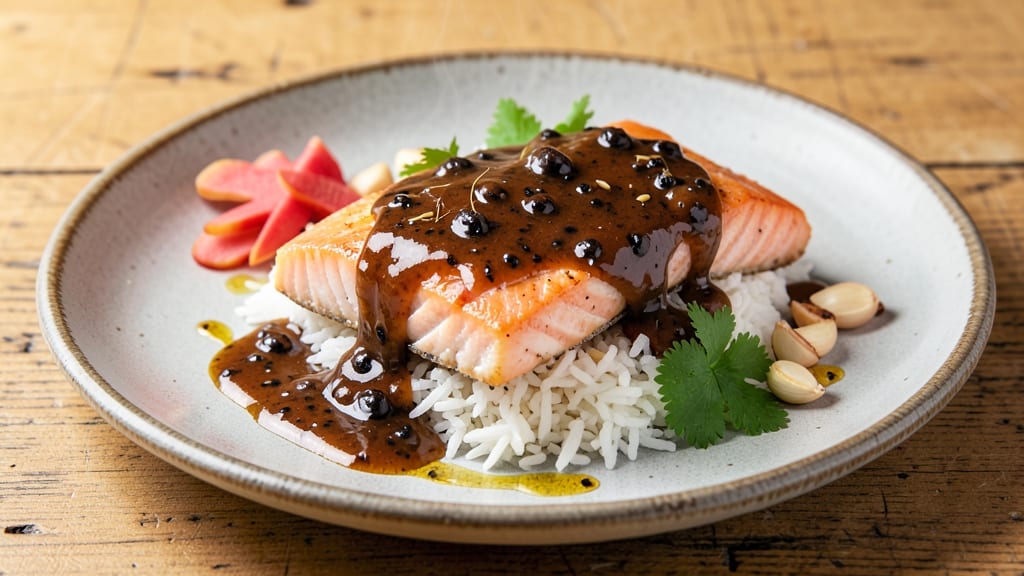
This steamed salmon with black bean sauce transforms simple fish into a restaurant-worthy dish using just 15 minutes of hands-on time. The secret lies in balancing the rich, umami depth of the sauce with delicate steamed salmon—no complicated techniques required.
I developed this recipe after realizing how often restaurant-quality seafood could be replicated at home with the right sauce. The black bean base adds natural sweetness and texture, while aromatics like garlic and ginger create layers of flavor that elevate every bite.
The beauty of this dish is its simplicity: steamed salmon stays moist and flaky, while the black bean sauce simmers down to a velvety consistency that coats the fish perfectly. No deep-frying or heavy marinades are needed—just fresh ingredients and precise timing.
The sauce’s natural umami from black beans and soy pairs beautifully with the mild sweetness of the salmon, creating a harmonious balance that’s both comforting and sophisticated.
What you’ll end up with is perfectly steamed salmon—tender, juicy, and infused with sauce—served with a glossy black bean reduction that adds depth to every forkful. The dish comes together in under 30 minutes and requires minimal cleanup, making it ideal for weeknight dinners or elegant gatherings.
The sauce also works as a versatile condiment for other proteins or grains, so you’ll get more than one meal out of this recipe.
Serve over steamed rice or with a side of roasted vegetables to round out the plate. The contrast of textures—silky salmon, creamy sauce, and fluffy rice—makes this dish feel like a culinary achievement without the fuss. Ready to elevate your salmon game? Let’s get started.
Ingredients for steamed salmon black bean sauce
Fifteen minutes of hands-on time transforms simple salmon into restaurant-worthy perfection with this umami-packed black bean sauce.
| Ingredient | Amount | Notes |
|---|---|---|
| Center-Cut Salmon Fillets 🐟 | 4 whole | Skin-on, 6-8 oz each, sushi-grade preferred |
| Black Beans 🫘 | 1 cup | Canned, drained and rinsed |
| Low-Sodium Soy Sauce 🍶 | ¼ cup | Kikkoman preferred for balance |
| Garlic Cloves 🧄 | 4 cloves | Freshly minced, aromatic powerhouse |
| Fresh Ginger 🌿 | 1 tbsp | Finely grated, peel removed |
| Sesame Oil 🫒 | 1 tbsp | Toasted, for aroma |
| Honey 🍯 | 1 tbsp | Local preferred for depth |
| Rice Vinegar 🍶 | 1 tbsp | White or seasoned |
| Vegetable Oil 🫒 | 1 tbsp | For salmon steaming basket |
| Scallions 🧅 | 3 whole | Thinly sliced, green parts only |
| Sesame Seeds 🌾 | 1 tsp | Toasted for crunch |
| Diamond Crystal Kosher Salt 🧂 | ½ tsp | For seasoning |
| Black Pepper 🌶️ | ¼ tsp | Freshly cracked |
| Jasmine Rice 🍚 | 1 cup | Uncooked, for serving |
| Lime Wedges 🍋 | 2 whole | For garnish |
The salmon makes all the difference here—sushi-grade or high-quality center-cut fillets stay moist and flaky when steamed. Trader Joe's or your local fishmonger are great sources for consistent quality. Look for bright pink flesh and minimal bruising. The black beans? Canned is fine, but if you've got dried, soak overnight for deeper flavor. Fresh ginger and garlic are non-negotiable—they're the aromatic backbone of that rich sauce. I always grab extra ginger because it's used in so many dishes, and Costco sells it in those big jars that last forever.
No sesame oil? Toasted peanut oil works in a pinch, though it'll change the flavor profile slightly. Short on rice vinegar? Apple cider vinegar at half the amount gets you close. The honey can be swapped for maple syrup, but it'll be less refined. For the sauce, low-sodium soy sauce is key—regular brands can make the dish too salty. If you're feeling adventurous, add a dash of fish sauce for extra umami depth. The scallions can be subbed with regular green onions, but the milder flavor means you might want to use a bit more. And if you're out of sesame seeds, toasted sunflower seeds give a similar crunch.
This sauce reheats beautifully—just warm it gently on the stove with a splash of water to loosen it up. The salmon itself? Cooks in 8-10 minutes and stays fresh for 2 days in the fridge if stored airtight. The sauce keeps 5 days in the fridge or 3 months frozen. I like to make extra sauce because it's so versatile—great on rice bowls, noodles, or even as a dip. The rice? Cook it ahead and reheat with a splash of water to keep it fluffy. Lime wedges should be added right before serving—their acidity brightens everything.
Why You'll Love This Recipe
- I’ll be real: I make double batches because the sauce clings to the salmon like glue. Reheat it the next day, and it’s just as good—no sad, dry fish here.
- Steam Magic: The salmon stays juicy and flaky without drying out—no oven babysitting required. Just steam it with the black bean sauce, and the aroma fills my kitchen like a spa treatment.
- Umami Bomb: That black bean sauce? It’s where the magic happens—ginger and garlic caramelize into something deep and savory. One taste and you’ll forget takeout exists.
- Weeknight Hero: Honestly, this feeds four for under $20 and takes less time than deciding what to order. Toss in some rice or greens, and dinner’s solved before the news comes on.
Step-by-step instructions for steamed salmon with black bean sauce
This method delivers perfectly tender salmon with a rich, umami-black bean sauce in under 30 minutes.
Prepare the Black Bean Sauce Foundation
In a small saucepan, combine the 1 cup black beans, 0.25 cup low-sodium soy sauce, 1 tablespoon honey, and 1 tablespoon rice vinegar. Bring to a gentle simmer over medium heat and cook for 5-6 minutes until the mixture thickens slightly and the flavors meld. You'll notice the sauce develop a glossy sheen and the beans soften just enough to break down.
While the sauce simmers, finely mince the 4 cloves garlic and grate the 1 tablespoon fresh ginger. Set these aside—they'll add layers of aromatic depth to your sauce. The key here is patience; don't rush the simmering or the flavors won't develop properly. If the sauce reduces too quickly, add 1-2 tablespoons water to maintain consistency.
Build the Sauce with Aromatics and Finish
Remove the sauce from heat and stir in the minced garlic and grated ginger. Let it steep off the heat for 2-3 minutes—this allows the raw garlic and ginger to infuse without burning. Then return to low heat and stir in 1 tablespoon toasted sesame oil and 1 teaspoon sesame seeds. The sesame oil will add nutty aroma while the seeds provide textural contrast.
Taste and adjust seasoning with 0.5 teaspoon diamond crystal kosher salt and 0.25 teaspoon black pepper if needed. The sauce should be balanced—sweet from the honey, tangy from the vinegar, salty from the soy sauce, and aromatic from the ginger and garlic. Keep the sauce warm while you prepare the salmon.
Steam the Salmon to Perfect Doneness
Preheat your oven to 400°F for a quick broil finish. Line a baking sheet with parchment paper and place a steaming basket or heatproof rack over it. Arrange the 4 whole center-cut salmon fillets, skin-side down, in the basket. Drizzle lightly with 1 tablespoon vegetable oil to prevent sticking.
Steam the salmon in the oven for 12-15 minutes until the internal temperature reaches 135°F and the flesh flakes easily with a fork. The skin should be opaque but not crispy—we'll handle that in the next step. For best results, avoid opening the oven door during cooking to maintain even heat and moisture.
Finish the Salmon and Assemble
Transfer the steamed salmon to a plate and broil for 1-2 minutes to crisp the skin slightly. While it broils, thinly slice the 3 whole scallions (green parts only) and squeeze the juice from 2 whole lime wedges over the salmon. The lime brightens the dish and cuts through the richness.
To serve, spoon the warm black bean sauce over each fillet, drizzle with any accumulated juices, and sprinkle with additional sesame seeds. The sauce should coat the salmon beautifully, creating a harmonious blend of textures and flavors. Serve immediately with 1 cup cooked jasmine rice on the side for perfect balance.
Pro Tips For Making Steamed Salmon Black Bean Sauce
- PREP BEANS RIGHT: Drain and rinse your black beans twice before using—even if they’re canned. I learned this the hard way when my sauce turned into a thick, gloopy mess because of all that excess starch. Pat them dry afterward too, or your sauce will cling like glue.
- STEAM DON’T BOIL: Use a bamboo steamer or a colander over simmering water, not a sealed pot. Salmon steams in 8–10 minutes at most—any longer and it’ll turn rubbery. Keep the heat at a gentle simmer; if it’s roaring, you’re overdoing it.
- MINCE GINGER FINE: Skip the grater—use a sharp knife and chop the ginger into a paste. I was skeptical until I tried it: the texture blends smoother into the sauce, and you get that deep, aromatic punch without chunks. Aim for a consistency like wet sand.
- SALT THE SAUCE LAST: Hold off on adding soy sauce until the very end, or the garlic and ginger will release their oils and make the sauce break. Taste as you go—low-sodium soy packs a punch, and you can always add a splash of water to thin it if needed.
Perfect pairings for these flavors
Asian-Inspired Sides
Steamed jasmine rice is the classic pairing—its delicate floral notes complement the sauce's umami depth. Cook 1 cup jasmine rice with 1.5 cups water and a pinch of salt, then fluff with a fork before serving.
For extra flair, stir in 1 teaspoon toasted sesame oil and ½ teaspoon sesame seeds while still hot. 🍚
Quick-pickled cucumbers add a refreshing contrast. Toss 1 English cucumber (thinly sliced) with 1 tbsp rice vinegar, 1 tsp honey, and a pinch of red pepper flakes. Let sit for 15 minutes before serving to balance the dish's richness.
Vegetable Harmonies
Stir-fried bok choy brings vibrant color and texture. Blanch 4 cups baby bok choy for 2 minutes, then quickly stir-fry with 1 tbsp sesame oil, 1 minced garlic clove, and ½ tsp soy sauce. The slight bitterness cuts through the sauce's sweetness beautifully.
Roasted asparagus spears (tossed in 1 tbsp olive oil, ½ tsp salt, and ¼ tsp black pepper) roasted at 400°F for 12 minutes add a smoky contrast. Finish with a squeeze of lemon to brighten the plate.
Beverage Pairings
Lightly sparkling juniper-infused white wine (like a German Riesling) enhances the dish's umami notes while cleansing the palate. Look for wines with 10-12% ABV and citrus undertones to complement the black bean sauce.
For non-alcoholic options, try yuzu soda (a Japanese citrus soda) or green tea iced tea—both highlight the dish's fresh, aromatic elements. The slight tannins in green tea also pair wonderfully with the salmon's natural oils.
Sauce Versatility
Use the leftover sauce as a dipping sauce for fresh spring rolls or edamame—the contrast of textures makes it irresistible. Simply warm the sauce gently with 1 tsp water to loosen it.
Drizzle the sauce over cold soba noodles** with sliced avocado and scallions for a quick, refreshing salad. The sauce's depth elevates simple ingredients into a satisfying meal.
Nutrition facts
Frequently asked questions
Can I substitute canned black beans for dried?
For this recipe, canned black beans work best because they're pre-cooked and ready to use, saving time. If you prefer dried, soak them overnight and cook until tender (about 1 hour). However, dried beans may alter the sauce's texture slightly, making it thicker. For convenience, stick with canned beans unless you're making a larger batch.
How do I keep the salmon from drying out when steaming?
Steaming salmon requires gentle heat and moisture control. Use center-cut fillets with skin (skin-side down) to protect the flesh. Steam for 12-15 minutes max at 135°F internal temp, and avoid overcrowding the basket. A light drizzle of vegetable oil before steaming also helps lock in moisture. The broil finish adds crispness without drying the fish.
Can I make the black bean sauce ahead of time?
The sauce keeps well in an airtight container for 5 days in the fridge or 3 months frozen. Reheat gently on the stove with a splash of water to restore consistency. For best flavor, let it come to room temperature before reheating. The sauce actually improves overnight as the flavors meld further.
What if I don't have sesame oil or seeds?
No problem! Swap sesame oil for toasted peanut oil (for nutty flavor) or neutral oil (for mild taste). For seeds, try toasted sunflower seeds or crushed peanuts for crunch. The dish will still taste delicious—just slightly different in texture and aroma. These alternatives work especially well if you're avoiding sesame allergens.
Is this recipe suitable for meal prep?
Yes, but with a few adjustments. Store the steamed salmon and sauce separately in airtight containers for up to 2 days. Reheat the sauce separately and gently warm the salmon in a pan with a splash of water. Assemble just before serving to maintain optimal texture. The rice should be cooked fresh or reheated with a splash of water to prevent sogginess.