
Side Dishes
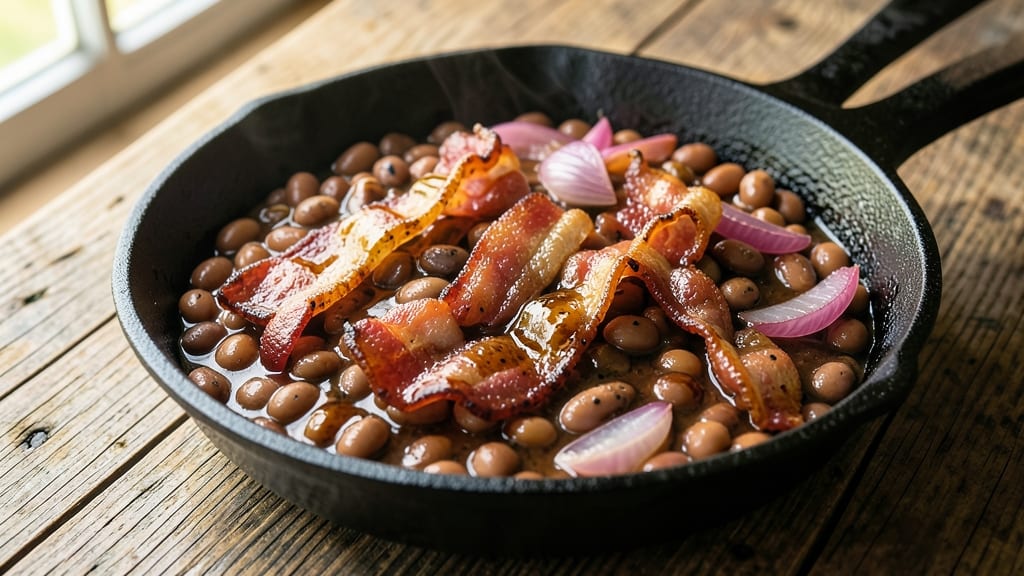
This traditional baked beans recipe delivers the rich, smoky-sweet flavor that makes them a classic side dish at any meal. 💫 I first learned to make them from my neighbor Mrs. Henderson in Cincinnati, where we'd slow-cook them all day on Sunday for the week ahead.
The secret lies in the balance of molasses, bacon, and slow simmering—never rushing the process.
What sets these beans apart is the deep, caramelized richness that comes from hours of gentle cooking. You'll start with dried navy beans soaked overnight, then simmer them with crispy bacon, onions, and a touch of brown sugar until they're tender and the sauce is thick and glossy.
The molasses adds that signature sweetness, while a splash of vinegar brightens the flavors.
By the time you're done, you'll have a pot of beans that's so flavorful it could stand on its own as a main dish. The bacon adds smoky depth, the beans become creamy yet hold their shape, and the sauce clings to each bite.
This is comfort food at its finest—perfect for holidays, game days, or any night you crave something hearty.
Serve them alongside pulled pork, grilled sausages, or even as a vegetarian main with cornbread. The leftovers only get better as the flavors meld further. Here's how to make them the traditional way—no shortcuts, just pure, satisfying flavor.
Ingredients for traditional baked beans
Nine simple ingredients transform into a pot of soul-warming, slow-simmered baked beans.
| Ingredient | Amount | Notes |
|---|---|---|
| Dried Navy Beans 🧅 | 2 cups | Soaked overnight in cold water |
| Thick-Cut Bacon 🥓 | 1 lb | Uncooked, chopped into 1/2-inch pieces |
| Yellow Onions 🧅 | 2 whole | Medium size, chopped into 1/2-inch pieces |
| Molasses 🍯 | ½ cup | Unsulphured for best flavor |
| Brown Sugar 🍚 | ½ cup | Light or dark, packed |
| Apple Cider Vinegar 🍎 | ¼ cup | For tangy brightness |
| Kosher Salt 🧂 | 1 ½ tbsp | Adjust to taste |
| Ground Black Pepper 🌶️ | ½ tsp | Freshly ground preferred |
| Mustard 🥬 | 1 tbsp | Dijon or yellow, for depth |
| Garlic Cloves 🧄 | 4 cloves | Minced for aromatic punch |
| Beef Broth 🥫 | 1 ½ cups | Low-sodium for balance |
| Water 💧 | 2 cups | For initial soaking |
| Vegetable Oil 🫒 | 2 tbsp | For bacon frying |
The navy beans are the heart of this recipe—dried, not canned, because that's where the magic happens. Soak them overnight (or at least 8 hours) in cold water to soften them up. Costco or bulk bins usually have the best prices for dried beans, but any grocery store carries them. Look for beans that are firm and free of debris—no dusty or musty smells. The bacon? Thick-cut is key—it stays crispy longer and adds that smoky depth. I always grab Applewood-smoked bacon if I'm feeling fancy, but regular works too. The molasses should be thick and glossy, not thin and syrupy—Goya or Grandma's are my go-tos.
No molasses? Maple syrup at half the amount works in a pinch, though it won't give that same deep, caramelized flavor. Short on brown sugar? White sugar plus a pinch of cinnamon gets you close. The vinegar is non-negotiable—it cuts through the sweetness and keeps the beans from tasting flat. Apple cider vinegar has the best flavor, but white vinegar does the job. The mustard adds a subtle tang that balances everything out—Dijon is my pick, but yellow mustard works if that's what you've got. The broth? Low-sodium is crucial—you don't want the beans to taste salty. If you're vegetarian, swap the beef broth for a good-quality vegetable broth.
These beans taste even better the next day—3-4 days in the fridge is ideal, and they freeze beautifully for up to 6 months. I always double the batch because they disappear fast. Store them in a glass jar or airtight container to keep the flavors locked in. The sauce gets thicker as it sits, so add a splash of water if it looks too dry when reheating. Leftovers make an amazing sandwich filling or a quick breakfast hash—just crisp up some bacon on top!
Why You'll Love This Recipe
- One-Pot Magic: I swear by this recipe when I’m too tired to wash dishes. Toss everything—beans, bacon, onions—into a single pot, add water, and let the oven do the work. No chopping boards, no crowded countertops, just hands-off perfection.
- Sweet-Smoky Bomb: That molasses and brown sugar combo? It’s where the magic happens. The bacon renders fat that caramelizes into the beans, while the molasses deepens into a rich, almost sticky glaze. Honestly, I’ve tried store-bought versions—this tastes like a hug from your grandma’s kitchen.
- Tailgate to Tuesday: Between us, these beans are my secret weapon for game days, potlucks, or lazy Sundays. They’re hearty enough for a crowd but simple enough to throw together when you’re feeding a house full of people. (Yes, even on a Tuesday night.)
- Budget-Friendly Staple: Dried beans and bacon stretch like nothing else—this recipe feeds four for under $10. Plus, the leftovers? They get better the next day, so I always make double. My wallet and my freezer thank me every time.
Step-by-step instructions for traditional baked beans
Here's how to make the classic slow-cooked version with rich molasses and smoky bacon.
🔥 Step 1: Cook the Bacon and Sauté the Onions
In a large Dutch oven or heavy pot, heat the 2 tablespoons vegetable oil over medium heat. Add the 1 lb thick-cut bacon in ½-inch pieces and cook for 8-10 minutes until the bacon is golden brown and crispy. Use a slotted spoon to transfer the bacon to a paper towel-lined plate, leaving the rendered fat in the pot.
In the same pot, add the 2 whole yellow onions chopped into ½-inch pieces. Cook for 5-6 minutes until the onions are soft and translucent, stirring occasionally. This step builds the flavor foundation—don't rush it. The onions should caramelize slightly, adding sweet depth to the beans.
👨🍳 Step 2: Combine All Ingredients in the Pot
Drain the soaked 2 cups dried navy beans and add them to the pot with the onions. Stir to coat the beans in the bacon fat. Now add the 0.5 cup molasses, 0.5 cup brown sugar, 0.25 cup apple cider vinegar, 1.5 tablespoons kosher salt, 0.5 teaspoon ground black pepper, 1 tablespoon mustard, and 4 minced garlic cloves.
Pour in the 1.5 cups beef broth and 2 cups water, then stir everything together until fully combined. The mixture should be thick and syrupy—this is where the traditional sweet-and-smoky flavor develops. The beans should be mostly submerged, but that's okay; they'll expand as they cook.
🔥 Step 3: Simmer Until Tender and Flavorful
Bring the mixture to a gentle boil over medium-high heat, then immediately reduce the heat to low. Cover the pot and let it simmer for 2-2.5 hours, stirring occasionally. You'll know it's ready when the beans are fork-tender and the sauce has thickened into a glossy, molasses-rich coating.
Here's the thing—don't peek too often. Every time you lift the lid, you lose steam and moisture, which can make the beans tough. If the mixture gets too thick before the beans are tender, add a splash of water or broth. The beans should be soft enough to mash slightly between your fingers but still hold their shape.
⏰ Step 4: Finish with Crispy Bacon and Rest
Once the beans are tender, return the crispy bacon to the pot and stir gently to distribute it throughout. Let the beans simmer uncovered for an additional 10-15 minutes to thicken the sauce further. The aroma should be rich, smoky, and slightly sweet—this is your reward for patience.
Remove the pot from heat and let the beans rest for 10 minutes before serving. This resting time allows the flavors to meld and the sauce to thicken slightly. Serve warm with crusty bread or cornbread to soak up every last bit of that molasses-bacon goodness.
Pro Tips For Making Traditional Baked Beans
- Soak Beans Overnight: I learned this the hard way—rushing the soak means tough, mealy beans. Toss dried navies in cold water (4 cups per 1 lb) and let them sit 12+ hours. No soaking? At least cover by 2 inches and simmer 2 hours before baking—skipping this step makes the texture sad.
- Render Bacon Slow: Thick-cut bacon takes patience. Cook it low and slow until the fat pools but the meat stays crisp at the edges—about 15 minutes. Drain all but 2 tablespoons of fat (yes, even if you’re tempted to toss it). That rendered fat is the flavor base for your beans.
- Caramelize Onions First: Sauté onions in bacon fat until deep golden—about 20 minutes. I used to rush this, and the beans ended up tasting bland. The longer you cook them, the richer the molasses and sugar will taste later. (Pro move: Add a pinch of salt halfway through to break down the fibers.)
- Sweeten Gradually: Don’t dump all the molasses and sugar at once—add half during simmering, half before baking. The beans absorb flavors better this way, and you avoid that cloyingly sweet aftertaste. Taste as you go; you can always add more, but you can’t take it out.
Make-ahead tips for traditional baked beans
Prep Ahead Like Mrs. Henderson
My neighbor Mrs. Henderson always prepped her beans the night before—she swore by it. Start by soaking the 2 cups dried navy beans in 2 cups cold water overnight in the fridge. This not only softens them but also reduces cooking time.
Drain them in the morning, then store them in an airtight container in the fridge until ready to use. The beans will keep for 3-4 days soaked this way, giving you flexibility for when you're ready to cook. 💫
Slow Cooker Shortcut
For a hands-off approach, use a 6-quart slow cooker on low for 6-7 hours after combining all ingredients. I like to brown the bacon and sauté the onions separately first, then transfer everything to the slow cooker.
Add ½ cup extra broth if the mixture looks too thick during cooking. The slow cooker keeps the beans tender while letting the flavors meld beautifully. Perfect for busy days!
Freezer-Friendly Prep
Make a double batch and freeze half for later. Portion the cooked beans into quart-sized freezer bags, leaving 1 inch of headspace for expansion. Seal tightly and flatten to save space.
These freeze for up to 6 months—just thaw overnight in the fridge before reheating. I always keep a backup batch in my freezer because, honestly, they disappear too fast. 🥶
Reheating Perfection
Leftovers taste even better the next day, but if you need to reheat, do it gently. Transfer beans to a pot and heat over low-medium heat with 2-3 tablespoons of water or broth until warmed through.
Stir occasionally to prevent sticking. If the sauce thickens too much, add a splash more liquid. I like to finish with a sprinkle of fresh chopped parsley for brightness—it makes all the difference. 🌿
Make-Ahead Serving Suggestions
Plan to serve these beans at room temperature for potlucks—they hold up beautifully. For a cozy meal, reheat and serve with crusty sourdough or cornbread straight from the oven. I also love adding them to a breakfast hash with potatoes and eggs for a hearty brunch.
The flavors only get better with time, so don't hesitate to make extra!
Nutrition facts
Frequently asked questions
Why do traditional baked beans need to simmer so long?
The long simmering time—2-2.5 hours—is what creates that deep, caramelized flavor. Dried beans need time to soften completely, while the molasses and sugar slowly break down into a rich, glossy sauce. Skipping this step makes them taste flat and watery. Think of it like making a slow-cooked stew—patience pays off with layers of flavor.
Can I substitute canned beans for dried?
Yes, but the texture and flavor won't be the same. Canned beans are pre-cooked and release more moisture, which can make the sauce watery. If you must use them, drain and rinse 2 (15-oz) cans of navy beans, then simmer the mixture uncovered for 30-45 minutes to thicken the sauce. The beans will be softer and less hearty than dried.
What's the best way to make these vegetarian?
Swap the beef broth for vegetable broth and use smoked paprika or liquid smoke (½ teaspoon) to mimic bacon's smokiness. Add ½ cup diced mushrooms with the onions for umami depth. The molasses and vinegar still work perfectly—they're naturally plant-based ingredients.
How do I fix beans that taste too salty?
If you oversalted, stir in 1-2 tablespoons of cold water or broth per cup of beans and simmer for 10 minutes to dilute the salt. For a more dramatic fix, spread the beans on a baking sheet and bake at 250°F for 30 minutes, then add fresh broth. The key is to thin the sauce first—salty beans are usually a symptom of too-thick liquid.
Can I bake these in the oven instead of stovetop?
Transfer everything to a Dutch oven or oven-safe pot and bake at 325°F for 3-4 hours, covered with foil. Stir once halfway through. The oven method is great for hands-off cooking, though you may need to add ¼ cup water if it gets too dry. The flavors develop just as deeply—it's all about the slow cooking.