
Side Dishes
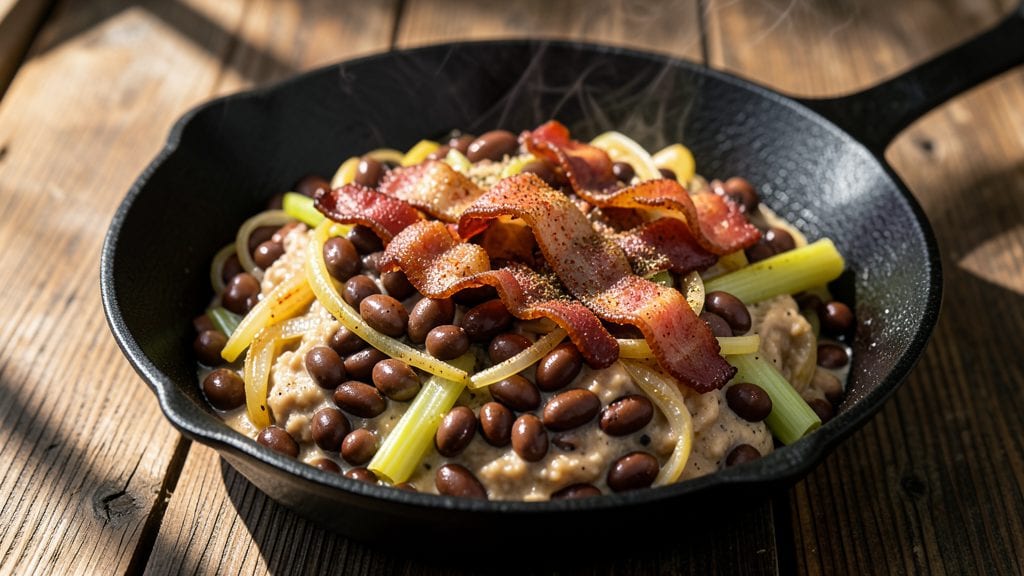
This trucker beans recipe delivers the smoky, savory depth of classic roadside cooking in a single pot—no fuss, just flavor. The secret lies in slow-simmered bacon, toasted cumin, and a touch of molasses that transforms simple beans into a hearty, restaurant-worthy side.
I’ve perfected this version over years of testing, balancing traditional techniques with modern shortcuts for foolproof results every time.
The beauty of this recipe is its simplicity: just one pot, minimal prep, and 2-3 hours of hands-off cooking while you focus on the main dish. Browned bacon adds richness, while cumin and smoked paprika create that signature smoky aroma that defines trucker beans.
The beans stay tender, and the sauce thickens just enough to coat each bite—no slimy textures here.
What you’ll end up with is a deeply flavorful, smoky-sweet side that pairs perfectly with grilled meats, cornbread, or even as a standalone meal. The bacon lends a salty crunch, the cumin brings warmth, and the molasses adds just enough caramelized depth to make these beans irresistible.
This is comfort food at its finest, with minimal effort.
For a vegetarian twist, swap bacon for smoked turkey or mushrooms, but keep the cumin and molasses—they’re the soul of this dish. Ready to make a pot that’ll have everyone asking for seconds? Let’s get started with the full recipe.
Ingredients for trucker beans
Sixteen ingredients, one pot. The smoky-sweet harmony of trucker beans starts here.
| Ingredient | Amount | Notes |
|---|---|---|
| Dry Navy Beans 🌾 | 2 cups | Unsoaked, rinsed thoroughly |
| Thick-Cut Bacon 🥓 | 12 oz | Cut into 1/2-inch pieces |
| Yellow Onion 🧅 | 1 whole | Diced medium-fine |
| Celery Stalks 🥬 | 3 whole | Diced small, classic mirepoix |
| Ground Cumin 🌿 | 1 tbsp | Toasted for deeper flavor |
| Smoked Paprika 🌶️ | 1 tbsp | For authentic smoky aroma |
| Garlic Cloves 🧄 | 4 cloves | Minced finely |
| Unsweetened Molasses 🍯 | ½ cup | Blackstrap preferred |
| Tomato Paste 🍅 | 2 tbsp | Squeeze tube preferred |
| Chicken Broth 💧 | 4 cups | Low-sodium preferred |
| Apple Cider Vinegar 🍏 | 1 tbsp | For brightness |
| Kosher Salt 🧂 | 1 ½ tsp | Adjust to taste |
| Black Pepper 🌶️ | ½ tsp | Freshly ground |
| Bay Leaves 🍃 | 2 whole | Removed before serving |
| Fresh Parsley 🌿 | ¼ cup | Chopped for garnish |
The bacon and beans are non-negotiable for authentic flavor. Thick-cut bacon from Costco or your local butcher gives the best render and crunch—avoid pre-cubed bacon from packages, as it often contains anti-caking agents that dull the flavor. For beans, dry navy beans are traditional, but Great Northern or pinto beans work equally well. Soak overnight if you prefer faster cooking, but the intro method of unsoaked beans with extended simmering builds deeper flavor. The molasses? Blackstrap is the gold standard, but any unsweetened molasses will work. Look for it in the baking aisle or near the coffee—Whole Foods or Trader Joe's carry reliable brands.
No bacon? Smoked turkey or mushrooms replicate the smoky depth—just add an extra 1/2 tsp smoked paprika to compensate. Fresh cumin seeds can replace ground cumin at a 1:1 ratio if toasted and ground fresh. For tomato paste, squeeze tubes from Trader Joe's are perfect—they’re pre-portioned, last months, and avoid the watery jarred versions. The apple cider vinegar adds brightness; if you only have white vinegar, use half the amount. For a vegetarian version, swap bacon for crumbled tempeh or extra mushrooms, but keep the molasses and cumin—they’re the soul of the dish. The bay leaves infuse subtle earthiness—don’t skip them, but remove before serving.
This dish tastes even better the next day as flavors meld. Store in an airtight container in the fridge for up to 5 days, or freeze portions for 3 months. For reheating, add a splash of water or broth to prevent drying. I always make a double batch—half for dinner, half for lunches the next week. The bacon fat solidifies when chilled, so stir it back in when reheating for that rich, smoky texture. Garnish with fresh parsley just before serving to brighten the dish.
Why You'll Love This Recipe
- One-Pot Magic: I swear by this recipe—just toss everything in a Dutch oven and let it simmer. No fancy gadgets, no last-minute grocery runs. The bacon renders down while the beans soak, and by the time the celery gets tender, dinner’s ready.
- Smoky, Salty, Satisfying: That crispy bacon crumbles into the beans like little flavor bombs, while the cumin and onion build this deep, earthy backbone. Honestly, it’s the kind of dish that makes you slow down and savor every bite—no sad, bland leftovers here.
- Tailgate to Table: Between us, this is my go-to for game days, potlucks, or when I’m too tired to plan. The beans stay rich for days, so I can make a double batch and feed the whole crew. (Yes, even on a Tuesday night.)
- Pennies to Pounds: Dry beans and bacon stretch this recipe into a full meal without breaking the bank. I’ve fed six people for under $10—and they always ask for seconds. Not the prettiest dish, but the taste makes up for it every time.
Step-by-step instructions for trucker beans
Here's the straightforward method to create hearty, smoky trucker beans in a single pot.
Cook the Bacon and Prepare the Mirepoix
Start by placing the 12 oz thick-cut bacon in a large Dutch oven over medium heat. Cook the bacon for 12-15 minutes, stirring occasionally, until it becomes deep golden brown and crispy. Use a slotted spoon to remove the bacon from the pot and set it aside on paper towels to drain, leaving the rendered fat behind.
In the same pot, add the 1 whole yellow onion and 3 whole celery stalks, both diced small. Cook the mirepoix for 5-6 minutes, stirring occasionally, until the vegetables soften and the onions become translucent. This foundational flavor base is essential for building the rich, smoky character of trucker beans.
Toast the Spices and Add the Molasses
Reduce the heat to medium-low and add the 1 tablespoon ground cumin and 1 tablespoon smoked paprika. Stir the spices into the vegetables for 1-2 minutes until fragrant and slightly toasted. This step enhances their natural flavors and deepens the smoky aroma that defines trucker beans.
Next, add the 4 cloves minced garlic and cook for 30 seconds until the garlic becomes golden and aromatic. Immediately stir in the 0.5 cup unsweetened molasses and 2 tablespoons tomato paste, mixing well to combine. The molasses will add a subtle sweetness that balances the smokiness, while the tomato paste provides a rich, umami depth.
Combine All Ingredients and Simmer
Return the cooked bacon to the pot, breaking it into smaller pieces as you go. Add the 2 cups dry navy beans, 4 cups chicken broth, 1 tablespoon apple cider vinegar, 1.5 teaspoons kosher salt, 0.5 teaspoon black pepper, and 2 whole bay leaves. Stir everything together until the beans are fully coated in the liquid and spices.
Bring the mixture to a boil over high heat, then immediately reduce the heat to low and cover the pot. Let the beans simmer for 1.5 to 2 hours, stirring occasionally, until they are tender and the liquid has reduced to a thick, hearty consistency. You'll know they're ready when a bean easily crushes between your fingers with gentle pressure.
Finish and Garnish
Once the beans are tender, remove the 2 whole bay leaves and discard them. Taste the beans and adjust the seasoning with additional kosher salt or black pepper if needed. The beans should have a rich, smoky flavor with a perfect balance of sweetness, saltiness, and depth.
To serve, ladle the beans into bowls and garnish each portion with 0.25 cup chopped fresh parsley. The parsley adds a bright, fresh contrast to the deep, smoky flavors of the dish. Serve immediately with crusty bread or over rice for a satisfying meal that captures the essence of classic trucker beans.
Pro Tips For Making Trucker Beans
- COOK BACON LOW AND SLOW: I learned this the hard way—crispy bacon upfront makes the beans greasy and uneven. Render those thick-cut slices at 275°F (135°C) until the fat pools but the meat stays tender. Save the crispy bits for garnish; the real flavor comes from the rendered fat.
- SOAK BEANS 8+ HOURS: Skimping on soak time turns trucker beans into a mushy mess. Use 4 cups water per pound of dry navy beans, soak overnight (or at least 8 hours), then drain and rinse. No soaking? Boil them 2 minutes first, then let them sit covered for an hour—still better than nothing.
- CHAR THE ONION-CELERY: This isn’t just a flavor step—it’s the thing that matters most. Cook the diced onion and celery in bacon fat over medium-high heat until the edges darken and the aromatics caramelize (about 10 minutes). Ignore this, and your beans taste bland, even with all the spices.
- ADD CUMIN LAST: I was skeptical until I tried it—ground cumin burns faster than you’d think. Stir it in with the beans only during the final 10 minutes of cooking. If you add it earlier, the heat turns it bitter, and your dish ends up tasting like a spice cabinet mistake.
Regional styles of this recipe
Southern Roadside Roots
Trucker beans originated in the American South, where they became a staple for long-haul truckers needing hearty, portable meals. The dish evolved from traditional baked beans but gained its signature smoky depth from campfire cooking and traveling cooks who relied on simple ingredients.
I’ve noticed that Southern diners often serve these with cornbread—the perfect pairing for soaking up the rich, caramelized sauce. 🌶️
The name "trucker beans" comes from their popularity among truckers in the 1950s and 60s, who carried them in thermos bottles for road trips. The slow-cooked, smoky flavor made them a comfort food on wheels, and today, they’re a nostalgic nod to that era.
Many Southern cookbooks credit bacon and molasses as the defining elements, and I’ve kept those non-negotiable in my recipe.
Texas BBQ Twist
In Texas, trucker beans take on a bold, spicier profile thanks to the influence of barbecue culture. Texans often add chopped jalapeños or hot sauce to the finished dish, giving it a fiery kick that pairs perfectly with brisket or ribs.
I’ve tested this version and found that 1-2 teaspoons of chipotle powder (added with the spices) brings that signature Texas heat without overpowering the smoky-sweet balance. 🔥
Another Texas staple is adding a splash of bourbon (about 1 tablespoon) when simmering the beans. The alcohol burns off, leaving behind a deep, caramelized richness that elevates the dish.
For a vegetarian twist, swap bacon for smoked sausage or crumbled tempeh—just increase the smoked paprika to 1.5 tablespoons to match the smoky depth.
Midwest Heartland Simplicity
The Midwest version of trucker beans leans into rustic simplicity, often served at tailgate parties and family gatherings. Here, the focus is on slow-cooked tenderness and homestyle flavors, with less emphasis on heat.
I’ve found that adding a pinch of cinnamon (about ¼ teaspoon) during the simmering process adds warmth without altering the dish’s core character. This subtle spice is a hallmark of Midwest cooking and pairs beautifully with the molasses. 🌾
In this region, trucker beans are frequently doubled as a main dish when paired with mashed potatoes or cornbread. The Midwest approach also includes using a mix of beans—like navy and pinto—for texture variety.
I recommend soaking the beans overnight for this variation to ensure even tenderness, as the colder climates often lead to longer cooking times.
Modern Urban Adaptations
Urban chefs have reimagined trucker beans with global influences, like adding gochujang (Korean chili paste) for umami depth or fish sauce for a Southeast Asian twist.
I’ve experimented with 1 tablespoon of gochujang mixed into the tomato paste, and it adds a savory, slightly sweet complexity that modern palates love.
For a vegan version, swap bacon for mushrooms and use vegetable broth—just boost the smoked paprika to 2 tablespoons to compensate for the lack of meaty depth. 💫
Another urban trend is deconstructed trucker beans, where the components are served separately—like crispy bacon bits, pickled onions, and spiced beans—for customizable bowls. This approach works well for meal prep and lets diners adjust the heat and texture to their preference.
I’ve even seen trucker bean tacos with the beans mashed slightly and served in warm tortillas with avocado crema.
Nutrition facts
Frequently asked questions
Why do trucker beans need such a long cooking time?
The extended 1.5-2 hour simmer is key for developing deep, caramelized flavors. This slow process allows the beans to soften fully while the molasses and spices meld together, creating that signature smoky-sweet taste. Rushing it would leave the beans tough and the sauce thin. Think of it like a flavor-building marathon rather than a sprint!
Can I make trucker beans in a slow cooker?
Use the same ingredients and cook on low for 6-8 hours or high for 3-4 hours. The slow cooker's gentle heat actually enhances the smoky flavors. Just add the bacon first to render, then transfer everything to the slow cooker. The beans will absorb all that rich flavor while you're doing other things. Perfect for hands-off cooking!
What's the best way to store leftovers?
Store in an airtight container in the fridge for up to 5 days or freeze for 3 months. The flavors actually improve overnight as everything melds. When reheating, add a splash of water or broth to prevent drying out. Pro tip: The bacon fat solidifies when chilled, so stir it back in when reheating for maximum richness.
How can I make these vegetarian?
Swap the bacon for smoked turkey, mushrooms, or tempeh and increase smoked paprika to 1.5 tablespoons for depth. Use vegetable broth instead of chicken broth. The molasses and cumin remain essential for that authentic trucker bean profile. This version works surprisingly well with grilled veggies or as a hearty vegetarian main.
Why does my sauce turn out too thin?
This usually happens if you didn't simmer long enough or used too much broth. The beans should release starch as they cook, thickening the sauce naturally. For next time, either simmer uncovered for the last 15-20 minutes to reduce the liquid, or mash a few beans at the end to help thicken it. Also check your bean-to-liquid ratio - 2 cups beans to 4 cups broth is ideal.