
Sauces & Condiments
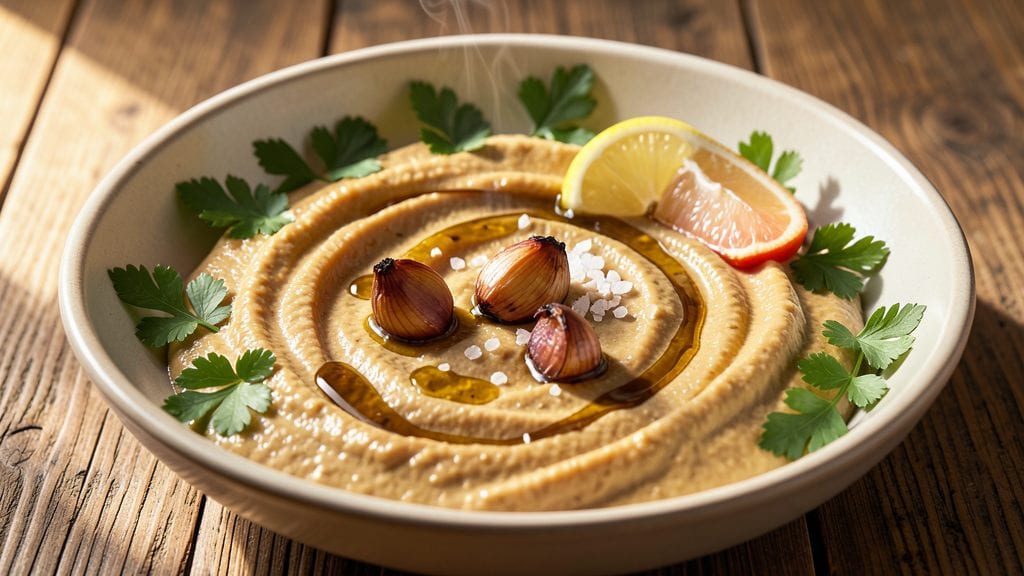
This bean hummus recipe delivers the silky texture and nutty depth that transforms simple dips into crowd-pleasing centerpieces. After perfecting the balance between creamy and chunky over countless batches, I’ve developed a method that ensures every spoonful is rich, flavorful, and foolproof.
The secret lies in precise measurements and blending techniques that eliminate grittiness while preserving that signature hummus body.
The foundation starts with high-quality chickpeas—drained, rinsed, and reserved for their liquid (aquafaba)—which adds natural creaminess without extra ingredients. Tahini provides that unmistakable nutty richness, while lemon juice and garlic brighten the flavor profile.
Olive oil ties everything together, creating a velvety consistency that’s smooth enough for dipping yet substantial enough to spread on sandwiches.
What you’ll end up with is a hummus that’s silky, balanced, and deeply satisfying, with a perfect ratio of creaminess to texture. The roasted garlic variation adds a caramelized depth, while beet hummus introduces a vibrant twist.
Whether you’re serving it with warm pita, fresh vegetables, or as a protein boost in wraps, this recipe delivers restaurant-quality results every time.
Store leftovers in an airtight container with a thin layer of olive oil on top to preserve freshness for up to five days. The key to success? Don’t skip the tahini—it’s what makes this hummus truly exceptional. Let’s get blending!
Ingredients for bean hummus
Nine essential ingredients crafting velvety hummus with restaurant-quality depth and texture.
| Ingredient | Amount | Notes |
|---|---|---|
| Canned Chickpeas 🥜 | 1 ½ cups | Drained, rinsed, and reserved aquafaba |
| Tahini 🥜 | ½ cup | Sesame paste, high-quality preferred |
| Extra-Virgin Olive Oil 🫒 | ½ cup | Light, fruity variety for balance |
| Fresh Lemon Juice 🍋 | 3 tbsp | Freshly squeezed, seeds strained |
| Garlic Cloves 🧄 | 3 whole | Roasted for caramelized depth |
| Diamond Crystal Kosher Salt 🧂 | ½ tsp | Fine grain for even seasoning |
| Ground Cumin 🌿 | ½ tsp | Toasted for aromatic depth |
| Aquafaba 💧 | ¼ cup | Reserved chickpea liquid |
| Fresh Parsley 🌿 | 2 tbsp | Chopped, for vibrant finish |
The chickpeas form the backbone of this recipe, so prioritize high-quality canned varieties—avoid those with skin splits or soft centers. Trader Joe's and Whole Foods carry excellent options, often labeled as 'organic' or 'BPA-free.' Reserve the aquafaba (chickpea liquid) as it acts as a natural emulsifier, replacing eggs in vegan cooking. For tahini, Penzeys Spices offers premium sesame paste with robust flavor, but store-brand options work if labeled '100% sesame.' The garlic should be roasted—wrap whole cloves in foil with a drizzle of olive oil, bake at 400°F for 20 minutes—this caramelization elevates the hummus from good to exceptional.
No tahini? Substitute with 0.25 cup roasted sesame seeds blended into oil—though texture will differ slightly. Fresh lemon juice can be swapped for bottled in a pinch, but add a pinch of extra salt to compensate for lower acidity. For garlic, garlic powder at half the amount works, though roasted flavor is irreplaceable. The aquafaba can be omitted if unavailable, but add 1 tbsp extra olive oil to maintain creaminess. For a vibrant twist, beet hummus swaps 0.5 cup cooked beets for chickpeas, while roasted red pepper hummus incorporates 0.25 cup roasted red peppers. Always strain the lemon juice—seeds create bitterness.
Hummus oxidizes quickly, so store in an airtight container with a thin layer of olive oil on top to preserve freshness. Keeps for 5-7 days in the refrigerator, though texture degrades after day 3. For longer storage, portion into ice cube trays, freeze, and transfer to a bag—thaws beautifully for quick dips. The parsley wilts fast; add it fresh before serving. This hummus thickens upon refrigeration—stir in 1-2 tbsp water if too stiff before serving. Freezes for 3 months without significant texture loss.
Why You'll Love This Recipe
- Five-Ingredient Magic: I swear by this combo—just blend chickpeas, tahini, olive oil, lemon, and garlic. That’s it. No fancy gadgets, no hidden steps, just pure, creamy satisfaction with zero fuss.
- Garlic-Lemon Kick: The moment I hit pulse on that garlic and lemon? Instant brightness. The tahini adds richness, but the citrus cuts through it so cleanly—like a fresh breeze after a heavy meal.
- Party-Ready Dip: Serve it with pita, crackers, or veggies—it’s my go-to for game day, potlucks, or when friends drop by unannounced. (Yes, even on a Tuesday night.) The crowd always clears their plates first.
- Budget Meal Boost: A single can of chickpeas and a small jar of tahini stretch for days. Freeze extras in ice cube trays, then toss them into salads or sandwiches later—no waste, all flavor. My wallet thanks me.
Step-by-step instructions for bean hummus with nutty depth
This method delivers a velvety hummus with balanced texture and complex flavor—no food processor required.
Roast Garlic for Caramelized Depth
Preheat oven to 375°F. Wrap the 3 whole garlic cloves tightly in aluminum foil and place on a baking sheet. Roast for 20-25 minutes until soft and golden brown, with caramelized edges. This transforms raw garlic's sharpness into sweet, aromatic depth that elevates the entire hummus.
Let the roasted garlic cool slightly before peeling. The foil traps steam, creating a perfect roast—no burning or bitterness. I always test doneness by piercing with a knife; it should slide in easily with no resistance. Reserve the roasted cloves for blending later.
Blend Base Ingredients for Silky Texture
In a high-speed blender, combine the 1.5 cups drained chickpeas, 0.5 cup tahini, 0.5 cup extra-virgin olive oil, 0.25 cup aquafaba, 3 tbsp fresh lemon juice, 0.5 tsp ground cumin, and 0.5 tsp diamond crystal kosher salt. Blend on high for 2-3 minutes until completely smooth, scraping down the sides as needed.
The aquafaba acts as a natural emulsifier, creating that signature silky mouthfeel. If the mixture looks too thick, add 1-2 tablespoons of reserved chickpea liquid (from rinsing) to reach your desired consistency. The blend should be completely homogeneous with no visible chickpea fragments.
Incorporate Roasted Garlic and Finish with Freshness
Add the peeled, roasted garlic cloves to the blender and pulse 3-4 times until just combined. This preserves their caramelized sweetness without overpowering the blend. With the blender running on low speed, slowly drizzle in any remaining chickpea liquid if needed to achieve a spreadable, dip-able consistency.
Transfer the hummus to a serving bowl and swirl in the 2 tbsp chopped fresh parsley. The parsley adds vibrant color and a bright, fresh finish that cuts through the richness. For best flavor development, let the hummus rest at room temperature for 15-20 minutes before serving.
Adjust Seasoning and Serve
Taste and adjust seasoning with additional diamond crystal kosher salt or fresh lemon juice as needed. The hummus should be perfectly balanced—slightly tangy from the lemon, nutty from the tahini, with a subtle garlic sweetness. For serving, drizzle with a thin layer of extra-virgin olive oil and sprinkle with extra parsley for presentation.
This hummus keeps well in an airtight container in the refrigerator for up to 5 days. For serving, bring to room temperature before enjoying to restore its optimal texture. The blend of roasted garlic and fresh herbs creates a sophisticated flavor profile that works beautifully with warm pita, fresh vegetables, or as a spread for sandwiches.
Pro Tips For Making Bean Hummus
- Drain, Rinse, Repeat: That liquid in the can—aquafaba—is salty and thin, and it’ll turn your hummus into a sad, watery mess. Dump the chickpeas into a colander, give them a good shake, and rinse them under cold water twice. I learned this the hard way after serving a batch that tasted like diluted soup.
- Toast the Tahini: Warm your tahini in a small saucepan over low heat for 2-3 minutes—just until it smells nutty and fragrant. Cold tahini clumps like glue and fights the lemon juice, but toasted tahini blends smoothly and adds depth. (Yes, even if you’re impatient like me.)
- Crush Garlic Like a Boss: Minced garlic burns faster than you’d think, and burned garlic ruins hummus. Smash 2-3 cloves with the flat side of your knife first, then finely chop—no need to mince. This keeps the flavor bright and prevents that acrid aftertaste.
- Blend in Stages: Start with the chickpeas, tahini, and a splash of lemon juice—just enough to get the motor going. Once it’s a rough paste, then add the olive oil and remaining lemon. Dumping everything in at once turns your blender into a greasy, splattering disaster. (Your future self will thank you.)
Make-ahead tips for this bean hummus
Prep Ahead Basics
Hummus tastes even better after flavors meld, so I recommend prepping the base ingredients 1 day ahead. Store the roasted garlic cloves in the fridge wrapped in plastic wrap—they’ll keep for 3 days without losing their caramelized sweetness.
The aquafaba and chickpea liquid can be refrigerated in a sealed jar for 24 hours before blending. This gives you a head start when ready to blend. 💡
Batch Prep Strategy
Double the recipe and freeze half in 1-cup portions for quick use. Portion into silicone molds or ice cube trays, then transfer to a freezer bag. Thaw overnight in the fridge—stir in 1 tbsp water if too thick.
I use this method for meal prep: hummus lasts 3 months frozen without texture degradation. Perfect for busy weeks! ❄️
Overnight Flavor Boost
For maximum flavor development, blend your hummus 12 hours before serving. The tahini and lemon juice deepen in complexity when rested. Store in an airtight container with a thin layer of olive oil on top to prevent oxidation.
I notice the nutty depth intensifies after overnight chilling—almost like a fine cheese aging. 🧀
Reheating for Optimal Texture
Never microwave hummus—it turns grainy. Instead, transfer to a bowl and let sit at room temperature for 30 minutes before serving. For cold applications (like wraps), refrigerate until chilled.
If hummus thickens after reheating, thin with 1-2 tsp water or reserved chickpea liquid. The texture should be smooth and spreadable. ✨
Garnish Just Before Serving
Fresh herbs wilt quickly, so always add parsley or paprika right before serving. I also drizzle with extra-virgin olive oil and a pinch of smoked paprika for visual appeal.
This keeps the hummus looking restaurant-fresh, even when prepped ahead. The garnish adds a pop of color and freshness that transforms any dish. 🌿
Freezer-Friendly Variations
Roasted red pepper hummus freezes beautifully—just add 0.25 cup roasted red peppers to the blend before freezing. Beet hummus also holds up well, though color may darken slightly. For all frozen hummus, thaw in the fridge overnight for best texture. Avoid freezing with fresh herbs—they’ll turn mushy. 🥕
Nutrition facts
Frequently asked questions
Why does my hummus turn out grainy or chunky?
Graininess usually happens when chickpeas aren't blended long enough or when the mixture isn't smooth. Use a high-speed blender and blend for 2-3 minutes, scraping down the sides. For extra silkiness, strain through a fine-mesh sieve or add 1-2 tbsp aquafaba to help emulsify. Always start with cool ingredients—warm chickpeas can cause separation.
Can I make hummus without tahini?
Yes, but the flavor will be less rich. Replace the 0.5 cup tahini with 0.25 cup roasted sesame seeds blended into 0.25 cup olive oil. For a tahini-free version, add 1 tbsp ground flaxseed or 1 tbsp nutritional yeast to boost umami. The texture will be lighter but still creamy.
How do I adjust the consistency for dipping vs. spreading?
For a thicker spread, chill the hummus and add 1 tbsp tahini or 1 tbsp olive oil. For a thinner dip, stir in 1-2 tbsp water or reserved chickpea liquid. The ideal dipping consistency is like thick yogurt, while spreads should be smooth enough to pipe. Always adjust gradually—hummus thickens as it cools.
What's the best way to store hummus for maximum freshness?
Store in an airtight container with a thin layer of olive oil on top to prevent oxidation. Keeps for 5-7 days in the fridge. For longer storage, freeze in 1-cup portions—thaw overnight in the fridge. Avoid metal spoons (they react with lemon juice) and always cover with plastic wrap to minimize air exposure.
Can I substitute aquafaba with something else?
Yes, if you don't have aquafaba, use 1 tbsp olive oil or 1 tbsp neutral oil to maintain creaminess. For a vegan egg substitute, add 1 tbsp ground flaxseed mixed with 3 tbsp water (let sit for 5 minutes to thicken). The texture will differ slightly, but the hummus will still be flavorful and spreadable.