
Side Dishes
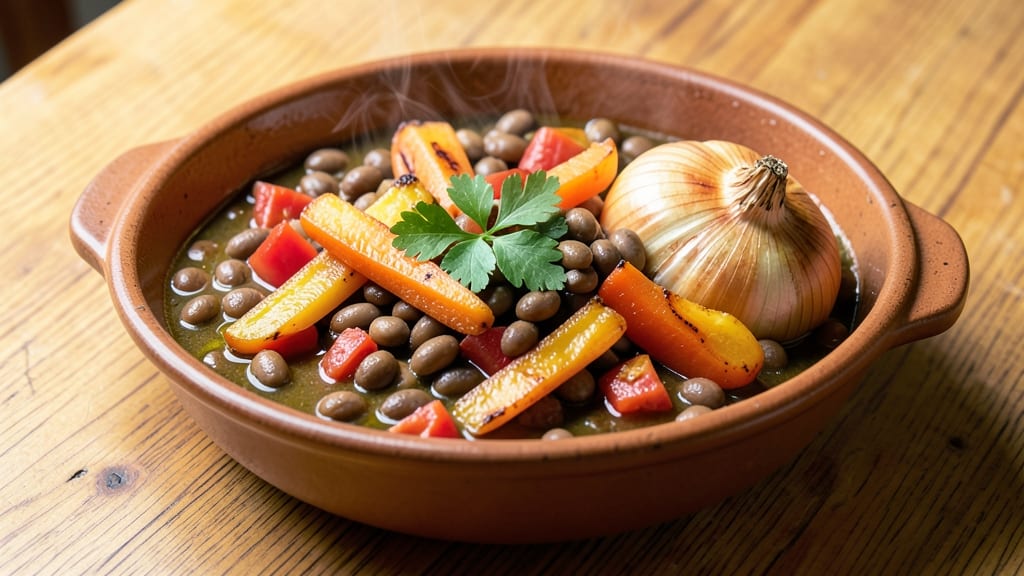
This one-pot beans and vegetable recipe transforms simple ingredients into a hearty, satisfying meal that requires just 30 minutes of active time and one pot to clean.
The beauty lies in its adaptability—whether served as a side for grilled meats or a vegetarian main course, it delivers bold flavors and texture without complicated techniques. I developed this after realizing how often I reached for canned beans only to find them bland and lacking depth.
The secret to this dish is balancing earthy beans with fresh vegetables—think carrots, bell peppers, and onions—while building flavor through aromatic spices and a touch of acidity. A splash of vinegar or lemon brightens the dish, while cumin and smoked paprika add warmth.
The vegetables roast directly in the pot with the beans, ensuring they absorb all the savory goodness without losing their natural sweetness.
What you’ll end up with is a rich, satisfying one-pot meal where tender beans and caramelized vegetables create a harmonious bite. The dish stays hearty enough to fill a bowl but light enough to enjoy as a side.
It’s the kind of recipe that proves homemade food can be both efficient and impressive—perfect for weeknights when you want flavor without fuss.
Customize it with grains like rice or quinoa, swap in seasonal vegetables, or add fresh herbs at the end. Here’s everything you need to make it—simple, versatile, and packed with flavor.
Ingredients for beans vegetable
Pantry staples meet fresh produce—no exotic ingredients, just bold flavors in one pot.
| Ingredient | Amount | Notes |
|---|---|---|
| Dried Navy Beans 🍲 | 1 ½ cups | Unsoaked, rinsed thoroughly |
| Yellow Onion 🧅 | 1 whole | Diced into 1/4-inch pieces |
| Carrots 🥕 | 2 cups | Chopped into 1/2-inch rounds |
| Red Bell Pepper 🌶️ | 1 whole | Diced into 1/4-inch pieces |
| Canned Diced Tomatoes 🍅 | 1 cup | No salt added preferred |
| Garlic Cloves 🧄 | 4 cloves | Minced finely for depth |
| Ground Cumin 🌿 | 1 ½ tsp | Toasted for richer flavor |
| Smoked Paprika 🌶️ | 1 tsp | For smoky depth |
| Salt 🧂 | 1 ½ tsp | Diamond Crystal preferred |
| Black Pepper 🌶️ | ½ tsp | Freshly cracked preferred |
| Red Wine Vinegar 🍷 | 1 tbsp | Brightens the dish |
| Olive Oil 🫒 | 2 tbsp | Extra-virgin for richness |
| Fresh Parsley 🌿 | ¼ cup | Chopped for garnish |
The beans are the backbone. Navy beans hold their shape beautifully, but kidney or black beans work too. Soak overnight for faster cooking, but the quick-soak method (boiling 2 minutes, then resting) saves time. For the vegetables, Trader Joe's has pre-chopped carrots and bell peppers if you're short on time—they're just as good as fresh. The onions? Yellow or red both work, but yellow adds a touch of sweetness. Garlic is non-negotiable here—freshly minced makes all the difference, but pre-minced in a jar is fine if you're in a rush.
No red wine vinegar? Apple cider vinegar or lemon juice work perfectly—just use the same amount. The smoked paprika can be swapped for regular paprika if you're out, but you'll lose that subtle smokiness. For the tomatoes, no-salt-added canned tomatoes are key—skip the salted ones unless you're willing to rinse them thoroughly. The olive oil? Extra-virgin is worth it—it adds richness that regular olive oil can't match. If you're making this ahead, the fresh parsley can wait until serving, but it's worth the extra minute for that pop of color and freshness.
This keeps beautifully in the fridge for 4-5 days, with flavors actually deepening over time. Portion into containers for easy lunches—it reheats perfectly. For leftovers, add a splash of water or broth when warming to keep it moist. Freezes well for up to 3 months—just thaw overnight in the fridge. The beans soften further when reheated, so they're even more tender the next day.
Why You'll Love This Recipe
- No-Soaking Needed: I’ll admit—soaking beans used to stress me out. But these navy beans? Just a quick rinse and a long simmer, and they turn tender without any fuss. The canned tomatoes handle the acidity like pros, so no extra prep.
- Sweet-Savory Magic: That carrot and bell pepper combo caramelizes into something unexpected—almost like a rustic ratatouille, but with the hearty texture of beans. The onions? They melt into the dish, adding depth without overpowering.
- Lunchbox Hero: Between us, this is my go-to for meal prep. Toss it with rice or serve it cold in wraps—it keeps for days, and the flavors only get better. My kid’s school lunchbox has never been so exciting (or actually eaten).
- Pantry Powerhouse: Honestly, what’s not to love about a recipe where the most expensive ingredient is the bell pepper? You’re feeding a family for under $10, and the leftovers? They’re just as good reheated as they are fresh. Budget win.
Step-by-step instructions for one-pot hearty bean and vegetable stew
This one-pot wonder delivers rich, smoky flavor with minimal prep—perfect for busy weeknights.
Sauté Aromatics and Spices
Heat the 2 tablespoons olive oil in a large, heavy-bottomed pot over medium heat. Add the 1 whole yellow onion and 2 cups carrots, cooking for 5 minutes until the onion softens and the carrots begin to caramelize slightly. This foundational step builds sweetness that carries through the entire dish.
Add the 4 cloves garlic cloves and cook for 30 seconds until fragrant—don't let them brown, or they'll turn bitter. Immediately stir in the 1.5 teaspoons ground cumin and 1 teaspoon smoked paprika, toasting for 30 seconds until the spices release their aromatic oils. This is where the smoky depth begins.
Add Vegetables and Tomatoes
Push the vegetables to one side of the pot and add the 1 whole red bell pepper, slicing it directly into the pot. Cook for 4 minutes until the edges soften. Stir everything together, then add the 1 cup canned diced tomatoes, scraping up any browned bits from the bottom—this captures all the flavor you've built.
Pour in 1 tablespoon red wine vinegar and stir. The acidity brightens the dish and balances the richness of the beans and vegetables. Let the mixture simmer for 5 minutes until the tomatoes break down slightly and the flavors meld. This step ensures every bite is vibrant and cohesive.
Incorporate Beans and Season
Add the 1.5 cups dried navy beans (rinsed thoroughly) and 1.5 teaspoons salt. Pour in 4 cups water (or enough to cover the beans by 1 inch) and bring to a boil. Once boiling, reduce heat to low and simmer for 45 minutes, partially covered, stirring occasionally to prevent sticking.
After 45 minutes, check the beans—if they're still firm, add another ½ cup water and continue cooking for another 15-20 minutes. The beans should be tender but still hold their shape, absorbing the rich, flavorful broth. Here's where patience pays off—rushing results in mushy beans.
Finish with Herbs and Rest
Remove the pot from heat and stir in the 0.5 teaspoon black pepper. Sprinkle the 0.25 cup fresh parsley over the top and let the stew sit, covered, for 10 minutes. This resting period allows the flavors to fully integrate and the beans to soak up the remaining liquid.
Taste and adjust seasoning if needed—you might need a pinch more salt or a splash of vinegar to balance the flavors. Serve immediately with crusty bread or over rice. Each spoonful should deliver a harmonious blend of smoky spices, sweet vegetables, and tender beans—proof that simple ingredients can create something extraordinary.
Pro Tips For Making Beans Vegetable
- SOAK BEANS OVERNIGHT: I learned this the hard way—rushing the soak with hot water leaves skins tough and beans gummy. Cold overnight soaking (at least 8 hours) softens them evenly, and you won’t waste time simmering to catch up later. Drain and rinse before cooking to remove any funky residue.
- CHOP ONIONS SMALL: Big onion chunks turn to mush while beans simmer. Dice them into ¼-inch pieces—they’ll dissolve just enough to flavor without disappearing. Same goes for carrots: julienne them thin so they stay tender-crisp, not mushy.
- SIMMER LOW AND LONG: Navy beans need patience. After boiling 2 minutes to blanch, drop heat to a bare simmer (tiny bubbles, not rolling). Skipping this step turns them mealy, and you’ll end up with a stewy mess instead of creamy texture. Cover and let them work for 45-60 minutes.
- SALT LATER, NOT EARLY: Adding salt to soaking water toughens beans, and dumping it in at the start makes them absorb it too fast. Wait until the beans hit the pot with veggies and tomatoes, then season halfway through cooking. This keeps them tender and lets flavors develop properly.
Pro cooking tips for this recipe
Bean Texture Control
Dried beans need gentle heat to avoid splitting or turning mushy. After adding water, bring to a boil for exactly 2 minutes to soften their skins, then reduce to a low simmer. Stirring occasionally prevents them from sticking to the pot—this is where most home cooks go wrong.
I use a wooden spoon to gently break up any beans clinging to the bottom without mashing them. 🌡️
Vegetable Caramelization
Don’t skip the 5-minute caramelization of onions and carrots—this builds sweetness that elevates the entire dish. For deeper color, add 1 tsp brown sugar with the spices. Bell peppers should cook until just tender, not mushy.
If you’re short on time, roast the veggies at 400°F for 15 minutes before adding them to the pot—they’ll caramelize faster and add smoky depth. 🔥
Spice Toasting Trick
Toast your cumin and smoked paprika for 30 seconds in the hot oil—this releases their essential oils and intensifies their flavor. Skip this step, and your dish will taste flat.
For extra depth, add ½ tsp coriander or a pinch of cinnamon (trust me, it works!). Store spices in airtight containers away from light to preserve their potency. 🌿
Acidity Balance
The red wine vinegar isn’t just for tang—it cuts through the richness of the beans and vegetables. If your tomatoes are particularly acidic (like San Marzano), reduce to ½ tbsp vinegar.
For a brighter finish, add 1 tsp lemon zest at the end. Taste as you go—this is where most home cooks overlook flavor adjustments. 🍋
Resting for Flavor
Letting the stew rest for 10 minutes after cooking allows the beans to absorb the broth and flavors to meld. Skipping this step means a watery, uneven texture. If you’re in a rush, cover the pot and let it sit for 5 minutes—it’ll still improve.
Pro tip: Reheat gently on low heat to avoid breaking the beans. ⏳
Equipment Upgrades
A heavy-bottomed pot (like All-Clad) prevents hot spots and even cooking. If you don’t have one, a stainless steel pot works too. For extra flavor, use a cast-iron Dutch oven—it retains heat better and adds a subtle earthiness.
Avoid nonstick pots; they can’t handle the simmering time and may release harmful fumes at high heat. 🏆
Nutrition facts
Frequently asked questions
Can I use canned beans instead of dried?
For a quicker version, swap the dried navy beans for 2 (15-ounce) cans of navy beans, drained and rinsed. Reduce the cooking time to just 10 minutes of simmering after adding the beans to blend flavors. Just be sure to add them after the vegetables and tomatoes have cooked to avoid a watery texture. This cuts prep time by over an hour!
How can I make this dish spicier?
Add ½ teaspoon cayenne pepper or 1 teaspoon chili flakes when toasting the spices. For heat with depth, stir in 1 diced jalapeño with the bell pepper, or serve with a side of hot sauce. If you love smoky heat, increase the smoked paprika to 1.5 teaspoons and add ½ teaspoon chipotle powder for a slow-burning kick.
What vegetables can I substitute for the carrots and bell pepper?
This dish is incredibly flexible! Swap carrots for zucchini, sweet potatoes, or mushrooms—all add great texture. Bell peppers can be replaced with eggplant, green beans, or even spinach (add at the end). For a Mediterranean twist, use artichoke hearts or roasted cauliflower. Just adjust cooking times—denser veggies like sweet potatoes need 5-10 extra minutes of simmering.
Can I make this recipe in an Instant Pot?
Yes! Sauté the onions, carrots, garlic, and spices first, then add all remaining ingredients (including beans) and 3 cups water. Seal the lid and cook on high pressure for 12 minutes, followed by a 10-minute natural release. Finish with vinegar and parsley. The beans will be perfectly tender, and the flavors will meld beautifully—just don’t skip the sautéing step for depth.
Why did my beans turn mushy?
Mushy beans usually happen from overcooking or high heat. Always simmer gently after the initial boil, and stir occasionally to prevent sticking. If using dried beans, check for doneness at 40 minutes—they should be tender but still hold their shape. For canned beans, simmering too long after adding them can break them down. Next time, reduce the heat to low and add a splash of water if needed instead of increasing heat.