
Side Dishes
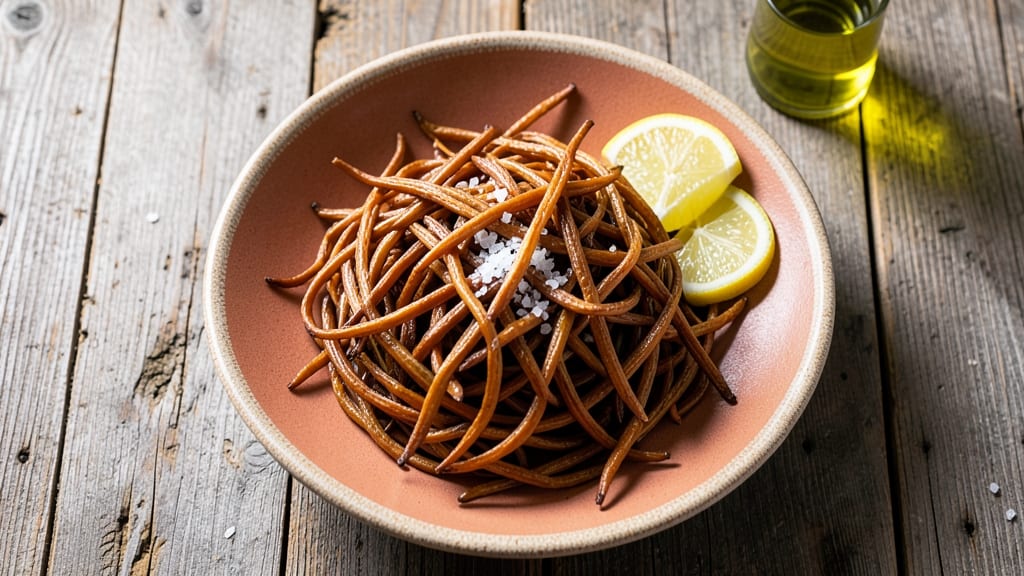
This dehydrated string beans recipe transforms simple string beans into crunchy, shelf-stable snacks while preserving their nutrients and opening up creative uses beyond fresh eating.
This method transforms ordinary green beans into a versatile ingredient—perfect for soups, salads, or as a standalone snack—all while keeping them vegan-friendly and packed with flavor. The process is straightforward but requires patience, as proper dehydration ensures both safety and texture.
Unlike traditional canning, dehydration removes moisture without heat processing, creating a lightweight, long-lasting product that maintains its vibrant color and crisp texture. You’ll need just 4 hours of active time (plus drying time) and basic equipment—a dehydrator, oven, or even a sunny windowsill in a pinch.
The key lies in blanching first to preserve color and texture, then arranging beans in a single layer for even drying.
What you’ll end up with is a pantry staple that’s crunchier than chips but far more nutritious, with a shelf life of up to 6 months when stored properly. These dehydrated beans can be rehydrated for salads, crushed into soups, or enjoyed as a satisfying snack on their own.
The process is foolproof once you master the timing and layering techniques.
Whether you’re prepping for meal prep or simply looking to reduce food waste, this method turns a common vegetable into a versatile, long-lasting ingredient that’s ready for any dish. Let’s get started with the step-by-step process that ensures perfect results every time.
Ingredients for dehydrated string beans
Four pounds of fresh string beans transform into crunchy, nutrient-rich snacks ready for any dish.
| Ingredient | Amount | Notes |
|---|---|---|
| Fresh String Beans 🌱 | 2 lbs | Trimmed, uniform length preferred |
| Ice Water 💧 | 2 cups | For blanching bath |
| Lemon Juice 🍋 | 1 tbsp | Freshly squeezed, preserves color |
| Sea Salt 🧂 | 1 tsp | Fine grain, Diamond Crystal preferred |
| Extra-Virgin Olive Oil 🫒 | 1 tbsp | Light drizzle for final coat |
| Dehydrator Trays 🍽️ | 2 whole | Non-reactive surface required |
| Parchment Paper 📄 | 1 sheet | Silicon mat alternative |
| Vacuum-Seal Bags 🎒 | 4 whole | Optional for long-term storage |
| Air-Dry Rack 🌿 | 1 whole | Alternative to dehydrator |
| Baking Sheet 🍳 | 1 whole | For oven dehydration method |
| Vinegar 🍶 | 1 tsp | White vinegar for pH balance |
The quality of your string beans matters most. Harvested within 24 hours ensures peak crispness—look for vibrant green, firm pods with no blemishes. Local farmers markets or specialty grocery stores like Whole Foods or Trader Joe's carry the freshest varieties. If using frozen beans, thaw completely and pat thoroughly dry before blanching. The blanching water should be at a rolling boil—90 seconds maximum preserves color and texture without overcooking. For optimal results, use a dehydrator with adjustable temperature (135°F is ideal), though an oven set to its lowest setting works in a pinch.
No dehydrator? An air-dry rack or oven set to 170°F with the door propped open achieves similar results. Substitute the lemon juice with 1 teaspoon apple cider vinegar if needed, though it won't preserve color as effectively. For storage, vacuum-sealed bags extend shelf life to 6 months—simply crush the beans slightly before sealing to remove air pockets. The olive oil isn't just for flavor; it creates a protective barrier that enhances crispness. If you prefer an oil-free version, omit it entirely and increase drying time by 30 minutes.
Dehydrated beans should be stored in a cool, dark place like a pantry or root cellar. For best texture, use within 3 months of drying, though they remain safe for up to 6 months when properly sealed. Rehydrate by soaking in warm water for 10-15 minutes before using in salads or soups. The beans will regain about 70% of their original volume. For snacking, enjoy them straight from the bag—they'll stay crisp for up to 2 weeks if kept airtight. Portion into small containers for easy snacking or meal prep additions.
Why You'll Love This Recipe
- Five-Minute Prep: I swear, this takes less time than waiting for the kettle to boil. Toss in fresh beans, splash with ice water and lemon juice—no chopping, no fuss—and let the dehydrator do the work while you sip your coffee.
- Bright, Tangy Crunch: That lemon juice isn’t just for flavor—it keeps them crisp and vibrant. Drizzle with olive oil afterward, and you’ve got a snack that’s bright, salty, and addictively moreish than store-bought chips.
- Snack Attack Ready: Honestly, these disappear faster than I can say “lunchbox emergency.” Perfect for backpacks, picnic spreads, or when you’re craving something crunchy but don’t want to heat up the kitchen.
- Zero-Waste Pantry Hero: Use up string beans before they wilt, and you’ll save money and reduce food waste. Plus, they keep for months—so you’re always stocked for last-minute cravings or forgotten grocery lists.
Step-by-step instructions for dehydrated string beans
Transform fresh string beans into crispy, long-lasting snacks using precise dehydration techniques.
Blanch and Prepare the String Beans
Fill a large pot with the 2 cups ice water and bring to a rolling boil over high heat. While waiting, trim the ends of the 2 lbs fresh string beans and cut them into 2-inch uniform pieces using a sharp knife. This consistent size ensures even dehydration.
Once boiling, add the string beans and cook for exactly 3 minutes. Immediately drain in a colander and transfer to a bowl of ice water to halt cooking. This blanching step removes surface moisture and preserves vibrant color. Drain thoroughly before proceeding—any residual water will prolong dehydration time.
Acidify and Season for Preservation
In a large mixing bowl, combine the blanched string beans with 1 tbsp lemon juice and 1 tsp sea salt. Toss gently to distribute evenly. The acidity from the lemon juice helps preserve color and prevents enzymatic browning during storage. Add 1 tsp vinegar to the mixture and toss again—this further stabilizes the beans for long-term preservation.
Spread the seasoned beans in a single layer on the 1 sheet parchment paper, ensuring no pieces overlap. This prevents uneven drying and maintains crisp texture. For best results, work in batches if your drying surface is limited.
Dehydrate Using Your Preferred Method
For dehydrator users: Arrange the beans on the 2 whole dehydrator trays, leaving space between each piece. Set the dehydrator to 135°F and process for 4-6 hours, checking periodically. The beans are ready when they snap crisply when bent—this indicates proper moisture removal without losing texture.
For oven users: Position a wire rack on the 1 whole baking sheet and arrange beans in a single layer. Place in a preheated 200°F oven with the door slightly ajar for ventilation. Dehydrate for 6-8 hours, rotating the tray halfway through for even exposure. Monitor closely to prevent over-drying.
Cool and Store for Maximum Freshness
Once completely dry, allow the beans to cool to room temperature on the drying surface. This prevents condensation when sealed. Transfer the cooled beans to the 4 whole vacuum-seal bags, dividing evenly for portion control. Remove as much air as possible before sealing to maintain crispness.
For immediate use, store in an airtight container at room temperature. The vacuum-sealed bags will preserve the beans for up to 6 months, while properly stored containers maintain quality for 3-4 months. For short-term storage, the 1 whole air-dry rack works well in a cool, dark pantry.
Enhance with Final Flavor Coating (Optional)
For extra flavor, lightly drizzle the dehydrated beans with 1 tbsp extra-virgin olive oil and toss gently to coat. This adds richness and helps prevent moisture absorption during storage. Spread on a clean surface and allow the oil to absorb for 10 minutes before resealing.
The beans are now ready to enjoy as crispy snacks, salty bites, or flavorful additions to soups and stews. Their texture should remain satisfyingly crunchy for weeks when stored properly, making them an excellent pantry staple.
Pro Tips For Making Dehydrated String Beans
- Trim the Fibers: DESCRIPTION: Use a sharp knife to slice open the seam of each bean and scrape out the stringy fibers with your thumbnail—don’t just snap them off. I learned this the hard way when my dehydrated beans kept a chewy, gritty texture no matter how long I dried them.
- Shock Them First: DESCRIPTION: Plunge freshly trimmed beans into ice water for 10 minutes before draining. This stops enzyme activity and keeps them from turning mushy during dehydration. (Yes, even if you’re impatient—trust me, it’s worth the wait.)
- Salt in Stages: DESCRIPTION: Sprinkle half the sea salt after the beans have dried for 4 hours, then finish with the rest once fully dehydrated. Adding it all upfront can draw out too much moisture early, slowing down the process.
- Oil Them Last: DESCRIPTION: Toss the beans in olive oil only after they’re completely dry—otherwise, the oil will create a sticky film that traps moisture. A light drizzle at the end keeps them crispy without gummy patches.
Wine and beer pairings for this dish
Crispy Snack Pairings
Pair your dehydrated string beans with sparkling water and a citrus twist—add a squeeze of fresh lemon or lime to complement their natural brightness. For a savory snack mix, combine them with roasted chickpeas and a sprinkle of smoked paprika for a protein-rich crunch.
I love keeping them in a mason jar with dark chocolate chips for a sweet-and-salty trail mix. 🌟
Light White Wine Matches
A dry Riesling from Germany or Austria pairs beautifully with dehydrated string beans, thanks to its crisp acidity and subtle honeyed notes. The wine’s brightness mirrors the beans’ natural sweetness while cutting through their earthy texture.
For a budget-friendly option, try a Sauvignon Blanc from New Zealand—its zesty citrus flavors enhance the snack’s freshness. 🍷
Hoppy Beer Pairings
Opt for a light lager like Peroni or Heineken to balance the beans’ natural crunch without overpowering their flavor. The beer’s clean, crisp profile lets the beans shine as a standalone snack.
For a bolder option, a wheat beer like Blue Moon adds a touch of spice and citrus that complements the dehydrated texture. 🍺
Herbal Tea Harmony
Pair your dehydrated beans with mint or chamomile tea for a refreshing, caffeine-free combination. The herbal notes enhance the beans’ natural earthiness, making them feel like a sophisticated snack. I often enjoy them with iced hibiscus tea—the tartness pairs surprisingly well with the beans’ subtle sweetness. ✨
Spicy Dips Contrast
Dip your dehydrated string beans in spicy harissa or smoky chipotle cream for a flavor explosion. The heat and creaminess contrast perfectly with the beans’ crisp texture. For a lighter option, try a garlic-herb yogurt dip—the coolness balances the beans’ natural crunch. 🌶️
Cocktail Enhancements
Add dehydrated string beans as a garnish to gin and tonic or vodka soda for an unexpected crunch. Their subtle sweetness and texture elevate these classics. For a festive twist, sprinkle them over Aperol Spritz—the bitterness of the beans balances the cocktail’s sweetness beautifully. 🍸
Nutrition facts
Frequently asked questions
Can I dehydrate string beans without a dehydrator?
Use an oven set to 200°F with the door slightly open for ventilation. Arrange beans on a wire rack over a baking sheet and dehydrate for 6-8 hours, rotating halfway. For a no-heat option, try an air-dry rack in a warm, dry place (like a sunny windowsill) for 3-5 days, stirring occasionally.
How do I know when my string beans are fully dehydrated?
They’re ready when the beans snap crisply when bent—like dry pasta. If they bend without snapping, they need 1-2 more hours. Over-drying makes them brittle, so check every 30 minutes near the end. Store in an airtight container to maintain crispness.
Can I dehydrate string beans with skin on?
Yes, but peeling first gives a cleaner texture. If keeping the skin, ensure beans are uniform in size for even drying. The skin adds fiber but may darken slightly during dehydration. For best results, blanch with 1 tbsp lemon juice to preserve color.
What are the best ways to use dehydrated string beans?
Crush them into soups or stews for instant texture, use as a crunchy salad topping, or enjoy as a standalone snack. Rehydrate in warm water for 10-15 minutes before cooking. For extra flavor, toss with olive oil and spices before dehydrating.
Why did my dehydrated beans turn brown or mushy?
Brown spots mean oxidation—blanch with lemon juice next time to prevent this. Mushy texture usually means under-dehydration: increase time by 1-2 hours or use a lower oven temp (170°F). Always drain beans thoroughly after blanching.