
Sauces & Condiments
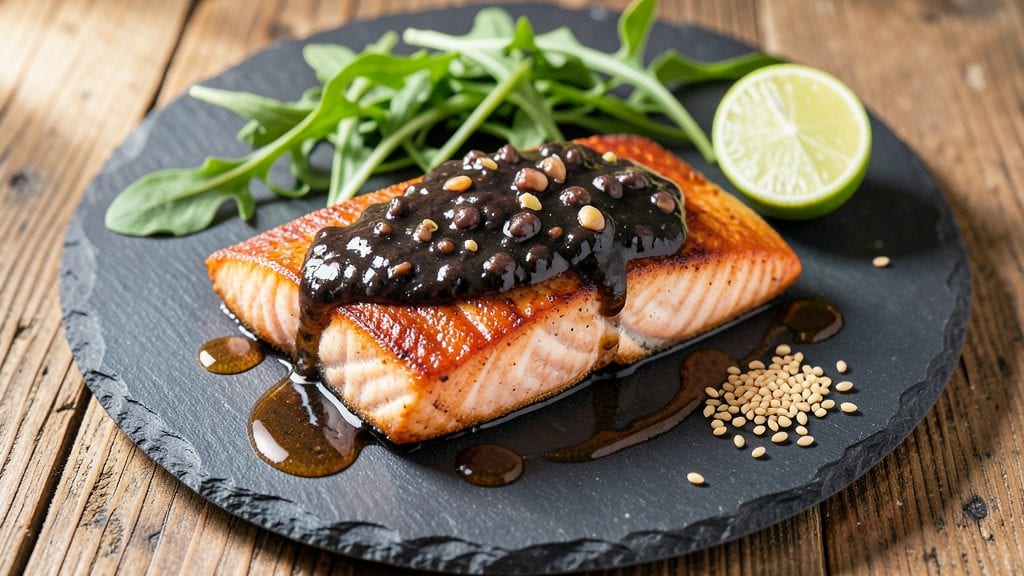
This baked salmon with black bean sauce transforms simple weeknight dinners into restaurant-worthy meals with just a few key ingredients. The umami depth from black beans creates a rich, velvety sauce that perfectly complements the delicate flakiness of the fish.
I developed this recipe after years of testing how to balance bold flavors with delicate textures—it never fails to impress.
The secret lies in the sauce preparation: blending canned black beans with garlic, ginger, and a touch of soy sauce creates a naturally thick, flavorful base that requires no additional thickeners. Baking the salmon on a bed of sauce ensures it absorbs those rich flavors while staying perfectly moist inside.
This method delivers tender, flaky salmon with a glossy, aromatic glaze that makes every bite unforgettable.
What makes this dish truly special is how effortlessly it comes together. With just 20 minutes of active prep and 15 minutes of baking, you'll have a complete meal that pairs beautifully with steamed vegetables or a simple quinoa salad.
The sauce's versatility means you can adjust the spice level to suit your taste, making it perfect for both casual dinners and special occasions.
For presentation, serve the salmon on a bed of greens or over jasmine rice, drizzled with extra sauce and garnished with sesame seeds. The contrast of textures—tender salmon, creamy sauce, and crisp vegetables—creates a visually stunning dish that's as impressive to look at as it is to eat.
Let's get cooking!
Ingredients for baked salmon with black bean sauce
Few ingredients, maximum flavor—this umami-rich salmon dish delivers restaurant-quality results with minimal effort.
| Ingredient | Amount | Notes |
|---|---|---|
| Center-Cut Salmon Fillets 🐟 | 4 whole | Skin-on, 6-8 oz each |
| Canned Black Beans 🫘 | 1 can | Drained, rinsed, low-sodium preferred |
| Garlic Cloves 🧄 | 4 cloves | Fresh, minced for sauce |
| Fresh Ginger 🌿 | 1 tbsp | Finely grated, peeled |
| Low-Sodium Soy Sauce 🍶 | 1 tbsp | For umami depth |
| Extra-Virgin Olive Oil 🫒 | 1 tbsp | Light, fruity variety |
| Sesame Oil 🫒 | 1 tsp | For aroma, toasted |
| Honey 🍯 | 1 tbsp | Wildflower preferred |
| Lime Juice 🍋 | 1 tbsp | Freshly squeezed |
| Toasted Sesame Seeds 🌾 | 1 tbsp | For garnish |
| Fresh Cilantro 🌿 | ¼ cup | Chopped, for garnish |
| Salt 🧂 | ½ tsp | Diamond Crystal preferred |
| Ground Black Pepper 🌶️ | ¼ tsp | Freshly cracked |
| Jasmine Rice 🍚 | 1 cup | Uncooked, long-grain |
| Steamed Broccoli 🥦 | 2 cups | Florets, for serving |
The salmon is the star, so center-cut fillets with skin ensure perfect texture. Look for bright, vibrant color at Whole Foods or your local seafood counter—avoid any with a strong fishy odor. For the black beans, low-sodium canned beans from brands like Bush's or Goya work best; rinse thoroughly to remove excess sodium. Fresh ginger and garlic are non-negotiable here—they're the backbone of the sauce's depth. If you're short on time, pre-minced garlic from the jar works in a pinch, but fresh is always better. The sesame oil adds that signature aroma, so grab the toasted variety at Asian markets for maximum punch.
No fresh ginger? Powdered ginger at half the amount works, though it lacks complexity. Short on sesame oil? Avocado oil or neutral oil will do, but the toasted nutty flavor is key. The honey balances the sauce's richness—agave or maple syrup are decent substitutes if you're avoiding refined sugar. For extra umami, add a dash of fish sauce or a splash of coconut aminos. The lime juice brightens everything, so bottled lime juice is fine if fresh isn't available. For the rice, jasmine or basmati both work beautifully, but avoid instant rice—it lacks the necessary texture contrast.
The sauce keeps for 5 days in the fridge, stored in an airtight container with a thin layer of oil on top to preserve freshness. The salmon is best served immediately after baking, but leftovers reheat beautifully in a 350°F oven for 8-10 minutes. For meal prep, bake an extra fillet and store it separately to maintain texture. The rice and broccoli can be prepped ahead and reheated separately. Garnishes like sesame seeds and cilantro stay fresh for 3 days in the fridge if wrapped tightly in a damp paper towel.
Why You'll Love This Recipe
- One-Pan Magic: I swear by this recipe when I’m too tired to scrub pots—just toss the salmon and beans on a sheet, drizzle the sauce, and bake. The black beans caramelize into a sticky glaze while the salmon flakes apart, all without a single dish to wash.
- Umami Bomb: That combo of ginger, garlic, and soy sauce? It’s the kind of flavor that makes you pause mid-bite. The black beans add this deep, earthy richness that balances the salmon’s natural sweetness—like a fancy restaurant bite at home.
- Lunchbox Hero: Between us, this is my go-to for meal prep. The leftovers reheat beautifully over rice or noodles, and the sauce clings to everything like it’s glued on. Pack it in containers, and you’ve got a protein-packed lunch that’ll actually get eaten.
- Budget-Friendly Luxury: Salmon feels fancy, but the black beans stretch it into a full meal without breaking the bank. I’ll often double the sauce to freeze half—then pull it out later for stir-fries or quick pasta tosses. Fancy dinner, zero guilt.
Step-by-step instructions for baked salmon with black bean sauce
Here's how to achieve perfectly flaky salmon with a rich black bean sauce that balances sweet, savory, and tangy flavors.
Prepare the Black Bean Sauce
In a small food processor, combine the drained and rinsed canned black beans, minced garlic cloves, finely grated fresh ginger, low-sodium soy sauce, extra-virgin olive oil, sesame oil, honey, and lime juice. Pulse until smooth but still slightly textured—about 30-45 seconds. This sauce should be thick enough to coat the back of a spoon but still pourable.
Taste and adjust seasoning with the 0.5 tsp salt and 0.25 tsp ground black pepper if needed. The sauce should have a deep umami flavor with a subtle sweetness from the honey. Transfer the sauce to a small saucepan and simmer over medium-low heat for 5-7 minutes, stirring occasionally, until slightly thickened. Remove from heat and set aside.
Season and Bake the Salmon
Preheat your oven to 400°F. Pat the skin-on center-cut salmon fillets dry with paper towels—this ensures a crispy skin. Place the fillets skin-side down on a parchment-lined baking sheet. Season each fillet generously with 0.125 tsp salt and 0.0625 tsp ground black pepper (dividing the total amounts evenly).
Bake the salmon for 12-15 minutes, depending on thickness. You'll know it's done when the flesh flakes easily with a fork and the skin is crispy and golden brown. Avoid overcooking—salmon continues to cook slightly after removal from the oven. Let the salmon rest for 5 minutes before serving to retain moisture.
Cook the Jasmine Rice and Steam the Broccoli
While the salmon bakes, rinse the 1 cup jasmine rice under cold water until the water runs clear. Combine the rice with 1.5 cups water in a small pot and bring to a boil. Reduce heat to low, cover, and simmer for 15 minutes or until the liquid is absorbed. Fluff the rice with a fork and let it sit covered for 5 minutes before serving.
For the broccoli, steam the 2 cups steamed broccoli florets in a steamer basket over boiling water for 3-4 minutes until bright green and tender-crisp. Drain well and season lightly with a pinch of salt. Keep the broccoli warm until ready to serve.
Assemble and Serve
Divide the cooked jasmine rice among four plates. Top each serving with one salmon fillet, skin-side up. Spoon the black bean sauce evenly over the salmon, allowing it to drizzle down the sides. Garnish with the chopped fresh cilantro and toasted sesame seeds for added texture and freshness.
Serve immediately with the steamed broccoli on the side. The contrast of the flaky salmon, rich sauce, and bright broccoli creates a balanced, restaurant-quality meal. Each bite should deliver tender fish, a burst of umami from the black bean sauce, and a touch of sweetness from the honey and lime.
Pro Tips For Making Baked Salmon With Black Bean Sauce
- Preheat Like It’s Hot: Your oven should hit 425°F (220°C) and sit for 10 minutes before the salmon goes in—no exceptions. I learned this the hard way when my first batch turned out undercooked because the pan wasn’t hot enough. That’s the magic number for crispy edges and perfectly flaky salmon.
- Mash Those Beans: Skip the chunky black beans—give them a good mash with a fork before mixing with the sauce. This blends them into the sauce smoothly instead of ending up as random texture surprises. (Yes, even if the can says “ready to eat.”)
- Salt the Salmon First: Season the salmon fillets 20 minutes before baking—or at least 10 if you’re in a rush. The salt needs time to work its way in, especially for thicker center-cut pieces. Trust me, dry, flaky salmon tastes nothing like the sad, mushy kind.
- Deglaze the Pan: After removing the salmon, immediately pour in 2 tablespoons of water and scrape up those browned bits from the baking dish. Toss in the black bean sauce and let it simmer for 2 minutes—this adds depth of flavor that skipping would leave behind. (Your sauce will taste like it came from a restaurant.)
Wine and beer pairings for this recipe
Crisp White Wine
The bright acidity of a dry Riesling or Sauvignon Blanc cuts through the richness of the black bean sauce while complementing the salmon's delicate flavor. Look for a New Zealand Sauvignon Blanc—its citrus and herbal notes mirror the lime and cilantro in the dish.
Serve slightly chilled to enhance the wine's crispness and balance the meal's umami depth. 🍷
Light-Bodied Red
A Pinot Noir from Oregon or Burgundy offers a subtle earthiness that pairs beautifully with the sauce's depth. Choose a cool-climate Pinot with red fruit notes—avoid heavy, oaky reds that could overpower the dish. The wine's acidity will refresh your palate between bites of flaky salmon. 🍇
Asian-Inspired Beer
For beer lovers, a Japanese lager like Asahi Super Dry or Sapporo provides a clean, crisp backdrop. Alternatively, a wheat beer with citrus notes—such as Blue Moon—echoes the lime in the sauce. Serve slightly colder than room temperature to highlight the beer's refreshing quality. 🍺
Sparkling Contrast
A dry sparkling wine like Prosecco or Cava adds effervescence that cleanses the palate between rich bites. The bubbles also enhance the dish's umami flavors, making each mouthful feel lighter. Opt for a non-vintage Prosecco for a budget-friendly yet elegant pairing. ✨
Coffee or Tea Pairing
For a non-alcoholic option, a lightly roasted green tea like Sencha complements the dish's umami and ginger notes. Alternatively, a medium-roast coffee with chocolate undertones enhances the sauce's depth. Both options provide a refreshing contrast to the meal's richness. ☕
Nutrition facts
Frequently asked questions
Can I make this black bean sauce ahead of time?
Yes, you can prepare the sauce up to 5 days in advance! Store it in an airtight container with a thin layer of oil on top to preserve freshness. Reheat gently in a saucepan over low heat for 2-3 minutes before using. This saves time on busy weeknights while keeping all the flavor intact.
What if I don't have fresh ginger or garlic?
For ginger, use ½ teaspoon powdered ginger (though fresh adds better depth). For garlic, pre-minced jarred garlic works in a pinch, but fresh is ideal. If you're avoiding garlic entirely, try adding an extra ½ teaspoon onion powder to compensate for the missing flavor.
How do I keep the salmon from drying out?
Never overcook! Bake until the internal temperature reaches 125-130°F (about 12-15 minutes at 400°F), then let it rest for 5 minutes before serving. Patting the fillets dry before baking also helps crisp the skin without drying the flesh.
Can I substitute canned black beans with another type?
Canned black beans are ideal for their texture and flavor, but you could try lentils or chickpeas in a pinch. For a smoother sauce, blend them longer. Avoid kidney beans—they have a stronger flavor that may overpower the dish. Always rinse well to remove excess sodium.
What are the best sides to serve with this dish?
This recipe pairs beautifully with jasmine rice, steamed greens, or a light quinoa salad. For extra texture, try roasted sweet potatoes or a simple arugula salad with lemon vinaigrette. The sauce's richness balances well with bright, fresh vegetables.